
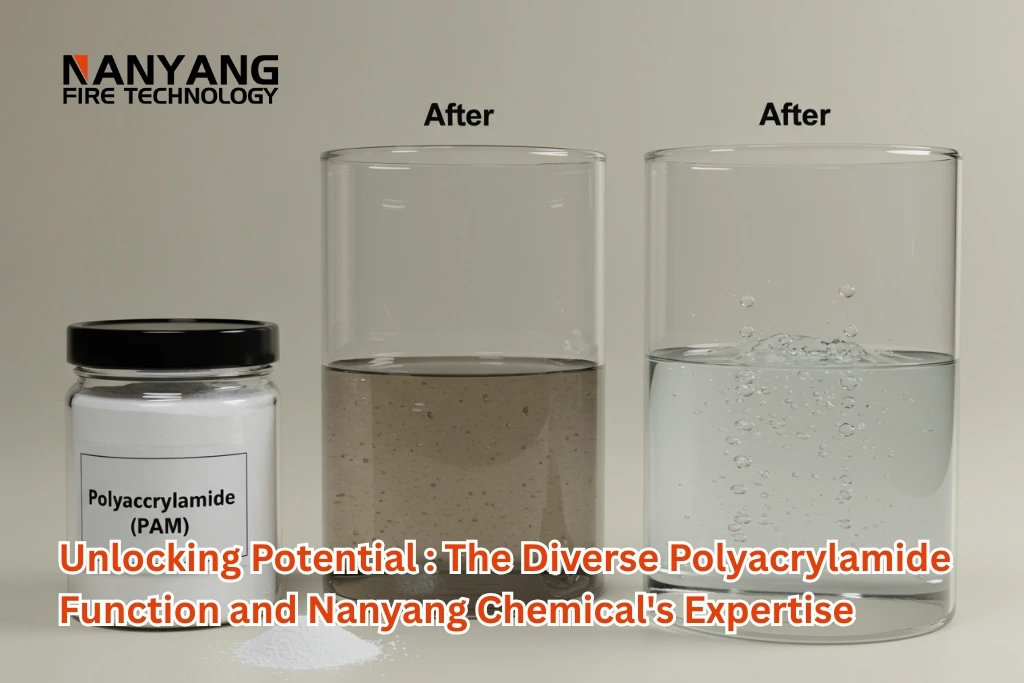
Imagine a world where industrial processes struggle with murky water, where oil extraction becomes inefficient, and where soil erodes without resilience. This less-than-ideal scenario would be a reality without an unsung hero: Polyacrylamide (PAM). Far from being a household name, this versatile, water-soluble synthetic polymer operates quietly behind the scenes, yet its Polyacrylamide function is nothing short of revolutionary. It’s the silent workhorse, the invisible force that dramatically enhances efficiency, improves product quality, and champions sustainability across a breathtaking array of sectors.
At its core, Polyacrylamide derives its power from its unique polymeric structure. Comprising long chains of acrylamide monomers, PAM’s magic lies in its ability to interact with various substances at a molecular level. Depending on its specific charge (anionic, cationic, or non-ionic) and molecular weight, its Polyacrylamide function manifests in surprisingly diverse ways. From binding tiny suspended particles into larger, easily removable flocs in wastewater treatment to acting as a powerful thickening agent in diverse solutions, PAM’s adaptability is truly remarkable. This inherent versatility makes it an indispensable tool for engineers, scientists, and industrialists striving for optimal performance and environmental responsibility.
The impact of Polyacrylamide’s functions extends across the globe, touching nearly every aspect of modern industry. In the critical realm of water treatment, PAM is paramount for ensuring access to clean water, performing vital roles in clarifying drinking water, treating municipal wastewater, and purifying industrial effluent. Its ability to aggregate fine solids efficiently leads to clearer water, reduced sludge volume, and more cost-effective operations. Similarly, the Polyacrylamide function is pivotal in the oil and gas sector, where it significantly boosts oil recovery from mature wells and enhances drilling fluid performance. In agriculture, it’s a silent guardian against soil erosion, improving water retention and promoting healthier crop growth. Even the paper industry benefits immensely, with PAM acting as a retention and drainage aid, contributing to stronger, more uniform paper products.
As a leading innovator and manufacturer in this critical field, Nanyang Chemical stands at the forefront of harnessing and optimizing the extraordinary capabilities of Polyacrylamide. With a deep understanding of its myriad functions, Nanyang Chemical is dedicated to producing high-quality PAM solutions that not only meet but exceed the stringent demands of modern industries. Our commitment to cutting-edge research and development ensures that our Polyacrylamide products are precisely engineered to deliver superior performance, whether it’s for achieving pristine water clarity, maximizing resource extraction, or fostering environmental stewardship. At Nanyang Chemical, we don’t just supply chemicals; we provide the foundational solutions that enable industries worldwide to unlock their full potential, proving that even an “unsung hero” like Polyacrylamide can lead to truly transformative outcomes. Our expertise in tailoring PAM solutions for specific applications means our clients experience unparalleled efficiency and tangible results, solidifying Nanyang Chemical’s reputation as a trusted partner in progress.
Table of Contents
What Exactly Does Polyacrylamide Do? The Core Functions Explored
Beyond its unassuming name, Polyacrylamide (PAM) orchestrates a symphony of chemical and physical interactions that yield profound results across countless industrial and environmental applications. To truly grasp its significance, one must delve into the fundamental mechanisms that define the Polyacrylamide function. It’s not a one-trick pony; rather, it’s a master of several distinct, yet often interconnected, roles, each leveraging its unique molecular architecture to solve complex challenges.
At the heart of nearly every Polyacrylamide function lies its polymeric nature. PAM is a long-chain synthetic polymer, meaning it consists of many repeating units (monomers) of acrylamide. The magic truly begins when these long chains dissolve in water. Depending on how they are manufactured, these chains can be:
- Non-ionic: No charge along the polymer backbone. These primarily rely on hydrogen bonding and physical entanglement for their effects.
- Anionic: Possessing negative charges along the chain, typically introduced by copolymerizing with acrylic acid or hydrolyzing some of the amide groups to carboxylate groups. These are attracted to positively charged particles.
- Cationic: Carrying positive charges along the chain, usually achieved by copolymerizing with cationic monomers. These are attracted to negatively charged particles.
The specific charge and the length (molecular weight) of the polymer chains dictate the predominant Polyacrylamide function it will perform most effectively. Let’s break down these core functions:
1. Flocculation and Coagulation: The Master Aggregator
Perhaps the most recognized and widespread Polyacrylamide function is its role as a flocculant and coagulant. This mechanism is critical for solid-liquid separation in industries ranging from water treatment to mining.
- Mechanism: When PAM is introduced into water containing suspended fine particles (like clays, silts, organic matter, or colloidal impurities), its long polymer chains begin to adsorb onto the surface of these particles.
- Charge Neutralization (Coagulation): For charged particles, especially those with an opposing charge to the PAM, the polymer can neutralize the surface charge, reducing the electrostatic repulsion that keeps particles apart.
- Bridging Flocculation: More commonly, the long polymer chains act as “bridges.” A single PAM molecule can adsorb onto multiple particles simultaneously. These bridged particles then collide and aggregate, forming larger, heavier clusters called “flocs.”
- Result: These newly formed flocs are significantly larger and denser than the original individual particles. This increased size and weight allow them to settle rapidly under gravity (sedimentation), be easily removed by filtration, or separated more effectively through processes like dissolved air flotation.
- Applications: The efficiency of this Polyacrylamide function is paramount in:
- Drinking Water Treatment: Removing turbidity, suspended solids, and color.
- Wastewater Treatment: Clarifying industrial and municipal effluents, dewatering sludge to reduce volume.
- Mining: Enhancing the separation of minerals from ore slurries, thickening tailings.
- Paper Making: Retaining fine fibers and fillers in the paper web, improving drainage.
2. Thickening and Viscosity Modification: The Rheology Architect
Another vital Polyacrylamide function is its remarkable ability to increase the viscosity of aqueous solutions, even at very low concentrations. This property makes it an invaluable rheology modifier.
- Mechanism: When PAM dissolves in water, its long, coiled polymer chains uncoil and expand. These expanded chains intertwine and entangle with each other and with water molecules, creating a network that restricts the flow of the liquid. The higher the molecular weight and concentration of the PAM, the more pronounced the entanglement and, consequently, the higher the viscosity.
- Result: This allows for precise control over the flow characteristics of a fluid, from making it more resistant to flow (thicker) to providing a degree of pseudoplasticity (shear-thinning behavior, where viscosity decreases under shear stress but recovers when the stress is removed).
- Applications: This Polyacrylamide function is critical in:
- Enhanced Oil Recovery (EOR): Injected into oil reservoirs, thickened water (polymer flooding) pushes oil more efficiently through porous rock, increasing recovery rates.
- Drilling Fluids: Used in drilling muds to control viscosity and suspend drill cuttings, preventing them from settling.
- Adhesives and Coatings: Providing desired consistency and preventing sagging.
- Cosmetics and Personal Care: Acting as a thickener and suspending agent in creams, lotions, and shampoos.
- Agriculture: In some specialized applications, to create viscous solutions for targeted delivery of nutrients or pesticides.
3. Adhesion and Binding: The Molecular Glue
Polyacrylamide also excels as an adhesive or binder, holding disparate particles together. This Polyacrylamide function relies on its ability to form strong bonds with various surfaces.
- Mechanism: Similar to flocculation, PAM chains can adsorb onto particle surfaces, but instead of forming large flocs for separation, they create a cohesive network that binds particles into a stable matrix. This can involve hydrogen bonding, electrostatic interactions, or physical entanglement.
- Result: Improved structural integrity, reduced dust, and enhanced consolidation of materials.
- Applications:
- Soil Stabilization: Preventing erosion by binding soil particles, improving soil structure.
- Dust Control: Suppressing dust in mining operations, construction sites, and unpaved roads.
- Agglomeration: Forming pellets or granules from fine powders in various industries.
- Paper Sizing: Improving the strength and printability of paper.
4. Drag Reduction: Smoothing the Flow
While perhaps less commonly highlighted than flocculation or thickening, the Polyacrylamide function as a drag reducer is significant in certain specialized contexts.
- Mechanism: When very small concentrations of high molecular weight PAM are introduced into turbulent liquid flows, the long polymer chains can damp out small-scale turbulent eddies near the pipe wall. This reduces the frictional resistance between the fluid and the conduit.
- Result: Increased flow rate through pipelines for the same pumping energy, or reduced energy consumption for a given flow rate.
- Applications:
- Long-Distance Pipelining: For transporting water, crude oil, or other fluids, improving efficiency.
- Firefighting: Increasing the reach and velocity of water jets.
5. Water Absorption and Hydrogel Formation: The Super Sponge
Certain forms of PAM, particularly cross-linked polyacrylamides, exhibit an extraordinary capacity to absorb and retain vast quantities of water, forming stable hydrogels.
- Mechanism: Cross-linking introduces chemical bonds between the polymer chains, creating a network structure. When exposed to water, the polymer network swells tremendously as water molecules are drawn into and held within the matrix by osmotic forces and hydrogen bonding, but the cross-links prevent the polymer from dissolving.
- Result: Formation of a superabsorbent gel that can hold hundreds or even thousands of times its own weight in water.
- Applications:
- Agriculture: Soil amendments to improve water retention and reduce irrigation needs, especially in arid regions.
- Diapers and Hygiene Products: As superabsorbent polymers (SAPs).
- Drug Delivery Systems: As matrices for controlled release of pharmaceuticals.
- Biomedical Applications: For tissue engineering, wound dressings, and contact lenses.
In essence, the true brilliance of Polyacrylamide function lies in its remarkable adaptability, stemming from precise control over its molecular structure. Whether it’s to separate, thicken, bind, reduce friction, or absorb, PAM provides a sophisticated, efficient, and often environmentally favorable solution. Its widespread utility underscores its status not just as a chemical, but as a critical enabling technology across the tapestry of modern industry.
Polyacrylamide in Action : Revolutionizing Industries with Nanyang Chemical’s Solutions
The theoretical understanding of the Polyacrylamide function comes alive when we observe its transformative impact across diverse industries. At Nanyang Chemical, we don’t just understand these functions; we meticulously engineer and deliver polyacrylamide solutions that drive efficiency, sustainability, and superior performance for our clients worldwide. Our commitment to quality and tailored innovation allows businesses to harness the full potential of this remarkable polymer, converting complex challenges into streamlined successes.
A. Water Treatment: Cleaner Water, Brighter Future
Perhaps no other sector benefits more profoundly from the Polyacrylamide function than water treatment. In a world grappling with water scarcity and pollution, PAM is a cornerstone for ensuring access to clean, safe water, whether for drinking, industrial processes, or environmental discharge.
- The Problem: Raw water sources (rivers, lakes, municipal wastewater, industrial effluents) are often laden with suspended solids, organic matter, turbidity, and even heavy metals, making them unsuitable for direct use or discharge. Traditional methods can be energy-intensive and less effective at removing fine particles.
- The Nanyang Chemical Solution (Polyacrylamide Function in Action): Nanyang Chemical’s range of high-performance flocculants (anionic, cationic, and non-ionic PAM) are meticulously designed for superior solid-liquid separation. Our products leverage the Polyacrylamide function of flocculation and coagulation to an unparalleled degree.
- Clarification: Our anionic and non-ionic PAMs are instrumental in municipal drinking water plants, effectively binding microscopic suspended particles into larger, heavier flocs that settle rapidly. This dramatically reduces turbidity, yielding crystal-clear water ready for further purification.
- Wastewater and Industrial Effluent Treatment: For municipal sewage and various industrial wastewaters (e.g., textile, food processing, chemical plants), Nanyang Chemical’s cationic PAMs are particularly effective. They efficiently neutralize the negative charge on organic solids and bacteria, leading to robust floc formation and rapid sedimentation. This ensures that discharged water meets stringent environmental regulations, protecting aquatic ecosystems.
- Sludge Dewatering: A critical and often costly aspect of water treatment is the management of sludge. Our specialized PAM products enhance sludge dewatering processes (e.g., belt presses, centrifuges, filter presses). By conditioning the sludge, they improve filterability and drainage, significantly reducing the volume and weight of the solid waste. This leads to substantial savings in transportation and disposal costs, demonstrating a clear economic benefit derived directly from optimized Polyacrylamide function.
- Nanyang Chemical’s Edge: We don’t offer generic solutions. Our technical experts work closely with clients to select the optimal PAM molecular weight and charge density for their specific water matrix and treatment goals. Our products consistently achieve superior solid-liquid separation, leading to clearer effluent, reduced chemical consumption of other coagulants, and lower operational costs. Furthermore, Nanyang Chemical’s PAM products meet stringent international quality and safety standards, ensuring reliability and compliance.
B. Oil & Gas: Maximizing Recovery, Minimizing Impact
In the challenging environment of the oil and gas industry, the Polyacrylamide function proves invaluable in enhancing extraction efficiency and managing complex fluid dynamics.
- The Problem: Conventional oil extraction leaves a significant amount of oil trapped in the reservoir. Pushing this residual oil out requires innovative techniques. Additionally, drilling operations demand fluids with precise rheological properties to stabilize the wellbore and transport cuttings.
- The Nanyang Chemical Solution (Polyacrylamide Function in Action): Nanyang Chemical supplies robust PAM grades specifically engineered for the demanding conditions of oilfields, where high temperatures and varying salinity can be prevalent.
- Enhanced Oil Recovery (EOR) – Polymer Flooding: Our high molecular weight PAMs are crucial for polymer flooding. Here, the Polyacrylamide function as a viscosity modifier is paramount. By dissolving PAM in water, we create a viscous solution that, when injected into the oil reservoir, “pushes” the oil more uniformly and effectively towards production wells. This controlled rheology helps prevent “fingering” (where water bypasses oil through high-permeability channels), leading to significantly higher oil recovery rates.
- Drilling Fluids: In drilling muds, Nanyang Chemical’s PAMs contribute to the thickening and suspension functions. They help control fluid loss into porous rock formations, stabilize the wellbore, and efficiently carry drill cuttings to the surface, maintaining optimal drilling operations.
- Oil-Water Separation: In produced water treatment, the Polyacrylamide function as a flocculant is vital for separating residual oil from the water phase, ensuring cleaner water for disposal or reinjection.
- Nanyang Chemical’s Contribution: We provide PAMs with excellent shear stability and salt tolerance, ensuring consistent performance even in challenging reservoir conditions. This translates directly to improved recovery rates, reduced drilling fluid costs, and enhanced environmental management within the oil and gas sector.
C. Paper Making: Enhancing Quality, Boosting Efficiency
The paper industry relies heavily on efficient dewatering and retention processes to produce high-quality paper consistently. The Polyacrylamide function plays a pivotal role here.
- The Problem: Paper production involves vast quantities of water and fine fibers/fillers. Ensuring that these valuable solids are retained in the paper web while water is efficiently removed is critical for both quality and cost-effectiveness.
- The Nanyang Chemical Solution (Polyacrylamide Function in Action): Nanyang Chemical’s PAM products are tailored to optimize papermaking processes.
- Retention Aid: Our PAMs act as superb retention aids, leveraging their flocculation and adhesion functions. They bind fine fibers, pigments, and fillers to the forming paper web, preventing their loss with the drained water. This not only improves paper quality (e.g., strength, opacity, uniformity) but also significantly reduces raw material waste, leading to substantial cost savings.
- Drainage Aid: By promoting flocculation, PAM also enhances the drainage of water from the paper web on the machine, speeding up the production process and reducing energy consumption in the drying section.
- Sludge Dewatering: Similar to wastewater treatment, PAM is used to dewater sludge generated from paper mill operations, reducing disposal costs.
- Nanyang Chemical’s Advantage: Our deep understanding of paper chemistry allows us to offer PAMs that improve machine runnability, reduce downtime, and ultimately contribute to the production of stronger, more consistent, and higher-quality paper products.
D. Agriculture & Soil Conditioning: Cultivating Healthier Land
In agriculture, the Polyacrylamide function extends to safeguarding soil health, enhancing water management, and promoting sustainable farming practices.
- The Problem: Soil erosion, poor water retention, and compacted soils are major challenges limiting crop yield and leading to environmental degradation.
- The Nanyang Chemical Solution (Polyacrylamide Function in Action): Nanyang Chemical develops environmentally conscious PAM solutions for agricultural applications.
- Soil Stabilization & Erosion Control: Our PAMs act as binders, aggregating soil particles to form stable aggregates. This enhances soil structure, reduces the susceptibility of topsoil to erosion by wind and water, and improves water infiltration.
- Water Retention: Certain PAMs leverage their water absorption capabilities, acting as superabsorbent polymers in the soil. They can hold significant amounts of water and release it slowly to plant roots, reducing irrigation frequency and improving water-use efficiency, particularly beneficial in arid and semi-arid regions.
- Nutrient Retention: By improving soil structure and water retention, PAM indirectly helps in preventing nutrient leaching, making fertilizers more effective.
- Nanyang Chemical’s Innovation: We emphasize environmentally friendly and biodegradable PAM options that support sustainable agriculture, increase crop yields, and help combat desertification, showcasing the positive environmental impact of the Polyacrylamide function.
E. Other Key Applications: The Pervasive Reach
The versatility of the Polyacrylamide function extends far beyond these primary industries:
- Mining & Mineral Processing: Beyond tailings dewatering, PAMs are used in mineral beneficiation to selectively separate desired minerals from gangue, improving recovery yields and process efficiency.
- Cosmetics and Personal Care: Here, the Polyacrylamide function as a thickener and stabilizer is crucial. It’s found in lotions, creams, shampoos, and conditioners, providing desired texture, preventing ingredient separation, and enhancing the sensory experience.
- Construction: Used in concrete admixtures for water retention and improved workability, and for soil stabilization in civil engineering projects.
- Textiles: As sizing agents, thickeners for printing pastes, and wastewater treatment aids for dye removal.
- Biomedical & Laboratory: Specialized, highly purified PAMs are indispensable for gel electrophoresis, a technique critical for separating proteins and DNA fragments based on size. They also have emerging roles in drug delivery systems and tissue engineering as hydrogel matrices.
Nanyang Chemical’s comprehensive portfolio and deep understanding of the intricate Polyacrylamide function allow us to provide tailored, high-performance solutions across this vast spectrum of applications. We are not just a supplier; we are a strategic partner, enabling industries to achieve greater efficiency, sustainability, and competitive advantage through the intelligent application of Polyacrylamide.
Why Choose Nanyang Chemical for Your Polyacrylamide Needs?
In a competitive global market, selecting the right partner for your industrial chemical needs is paramount. When it comes to Polyacrylamide (PAM), understanding the nuances of its Polyacrylamide function is crucial, but equally important is aligning with a supplier who can consistently deliver superior quality, tailored solutions, and unparalleled support. This is precisely where Nanyang Chemical distinguishes itself, offering compelling reasons why we should be your first and last choice for all your Polyacrylamide requirements.
Our commitment extends far beyond simply manufacturing a product; we are dedicated to empowering our clients to harness the full potential of every Polyacrylamide function for their specific applications, ensuring maximum efficiency, cost-effectiveness, and environmental responsibility.
1. Unrivaled Quality & Purity: The Foundation of Optimal Polyacrylamide Function
At Nanyang Chemical, quality isn’t just a buzzword; it’s the bedrock of our operations. We understand that the efficacy of any Polyacrylamide function is directly proportional to the purity and consistent characteristics of the polymer itself.
- Rigorous Quality Control: Our manufacturing facilities employ state-of-the-art production processes and adhere to the most stringent international quality management systems (e.g., ISO 9001). Every batch of PAM undergoes exhaustive testing at multiple stages, from raw material inspection to final product analysis. This meticulous approach guarantees consistency in molecular weight, charge density, solubility, and performance.
- Low Residual Monomer Levels: A critical aspect of PAM quality, particularly for sensitive applications like drinking water treatment or cosmetics, is the level of residual acrylamide monomer (ARM). Nanyang Chemical is committed to producing PAM with extremely low ARM content, often surpassing industry benchmarks. This not only enhances product safety but also ensures regulatory compliance and peace of mind for our clients.
- Performance Reliability: Our rigorous quality assurance means that when you receive a Nanyang Chemical PAM product, you can depend on its consistent performance. This reliability translates into stable process operations, predictable results, and reduced need for constant adjustments, optimizing the desired Polyacrylamide function in your system. We eliminate the guesswork, allowing you to focus on your core operations.
2. Tailored Solutions: Optimizing the Polyacrylamide Function for Your Unique Challenges
One size rarely fits all, especially when dealing with the diverse applications of Polyacrylamide. The optimal Polyacrylamide function for sludge dewatering in a municipal plant differs significantly from enhanced oil recovery or paper retention.
- Extensive Product Portfolio: Nanyang Chemical boasts one of the most comprehensive ranges of PAM products in the market. This includes anionic, cationic (across various charge densities), and non-ionic Polyacrylamides, with a wide spectrum of molecular weights. This breadth allows us to precisely match the PAM to the specific demands of your process.
- Custom Formulation Capabilities: Our technical team is not just knowledgeable; they are problem-solvers. We possess the capability and expertise to develop custom PAM formulations to address highly specific or unique challenges that off-the-shelf products might not adequately resolve. Whether it’s a particular pH range, salinity level, temperature, or the unique composition of your effluent, we can engineer a PAM that delivers the optimal Polyacrylamide function.
- Application-Specific Expertise: Our engineers and chemists deeply understand the intricacies of various industries—water treatment, oil & gas, mining, paper, agriculture, and more. This specialized knowledge allows us to recommend the most effective PAM solution, ensuring that you leverage the precise Polyacrylamide function needed for your application, maximizing efficiency and minimizing costs.
3. Expert Support & Technical Guidance: Your Partner in Success
Choosing Nanyang Chemical means gaining a partner, not just a supplier. We believe that true value comes from shared knowledge and continuous support.
- Pre-Sales Consultation: Our team of experienced technical consultants is available to discuss your challenges in detail. We conduct thorough analyses of your operational parameters, material characteristics, and desired outcomes to recommend the most suitable PAM product. This proactive approach ensures you start with the right solution from day one.
- On-Site Technical Assistance: We offer comprehensive on-site technical support, including laboratory testing, jar tests, pilot plant trials, and process optimization. Our experts can visit your facility to troubleshoot issues, fine-tune dosage rates, and provide training to your personnel, ensuring the Polyacrylamide function is maximized within your existing infrastructure.
- After-Sales Support: Our commitment doesn’t end with delivery. Nanyang Chemical provides ongoing after-sales support, monitoring performance, addressing any emerging concerns, and offering continuous optimization advice. We are invested in your long-term success.
4. Sustainable & Responsible Practices: A Commitment to a Greener Future
As a forward-thinking chemical manufacturer, Nanyang Chemical recognizes its responsibility towards environmental stewardship. Our approach to manufacturing and product development is deeply rooted in sustainability.
- Eco-Friendly Production: We continually invest in processes that minimize waste, reduce energy consumption, and adhere to strict environmental regulations. Our goal is to minimize our ecological footprint throughout the production lifecycle of Polyacrylamide.
- Sustainable Solutions: We develop PAM products that contribute to environmental benefits in their applications. For instance, our flocculants enable more efficient water recycling and reduced sludge volume, while our agricultural PAMs promote water conservation and soil health. We actively pursue innovations that enhance the positive environmental impact of the Polyacrylamide function.
- Safety First: Employee safety and community well-being are paramount. We maintain rigorous safety protocols in our facilities and provide comprehensive safety data sheets and handling guidelines for all our products, ensuring responsible use of Polyacrylamide.
5. Global Reach, Local Service: Reliability and Accessibility
Despite our international presence, Nanyang Chemical maintains a strong focus on localized service and timely delivery.
- Robust Supply Chain: With strategically located manufacturing facilities and a well-established global distribution network, we ensure reliable and efficient delivery of PAM products to clients across continents. This robust supply chain minimizes lead times and guarantees continuity of your operations.
- Customer-Centric Approach: While we operate on a global scale, our service philosophy is deeply customer-centric. We understand local market dynamics and regulations, providing personalized attention and responsive service that meets regional requirements.
In choosing Nanyang Chemical, you are not merely acquiring Polyacrylamide; you are partnering with an industry leader dedicated to innovation, uncompromising quality, expert support, and sustainable practices. We empower your operations to fully leverage the multifaceted Polyacrylamide function, translating into tangible improvements for your business and a greener footprint for the planet.
Conclusion
In summation, Polyacrylamide (PAM) stands as a testament to the power of polymer chemistry, a truly indispensable compound whose diverse and impactful Polyacrylamide function underpins critical processes across a multitude of industries. From ensuring the purity of our drinking water to enhancing the efficiency of oil extraction, from strengthening paper products to safeguarding agricultural lands from erosion, PAM’s role is not just significant—it is foundational to modern industrial and environmental progress. Its unique ability to act as a flocculant, thickener, binder, and water absorbent makes it an unparalleled tool for addressing complex challenges with elegant chemical solutions.
At Nanyang Chemical, we are proud to be at the forefront of this vital industry. Our unwavering commitment to producing Polyacrylamide of the highest quality, coupled with our deep technical expertise, ensures that our clients receive not just a product, but a comprehensive solution. We understand that maximizing the Polyacrylamide function requires precision, reliability, and a collaborative approach. This is why we invest heavily in rigorous quality control, offer tailored formulations, and provide unparalleled technical and after-sales support. Our dedication to sustainable manufacturing practices further reinforces our position as a responsible and forward-thinking partner.
By choosing Nanyang Chemical, businesses are not just sourcing a chemical; they are investing in a partnership that drives efficiency, fosters innovation, and champions environmental stewardship. We empower industries to unlock new levels of performance, reduce operational costs, and contribute to a more sustainable future. Experience the transformative power of optimized Polyacrylamide function with Nanyang Chemical – your trusted partner in powering progress.
Your Questions About Polyacrylamide & Nanyang Chemical Answered
What is Polyacrylamide (PAM) and what is its primary function?
Polyacrylamide (PAM) is a synthetic, water-soluble polymer made from acrylamide monomers. Its primary Polyacrylamide function is highly versatile, but most commonly it acts as a flocculant, a substance that helps small, suspended particles in water clump together into larger, more easily removable aggregates (flocs). Beyond flocculation, it also functions as a thickening agent, a binder, and in some forms, a superabsorbent material.
How does Polyacrylamide work as a flocculant in water treatment?
In water treatment, the Polyacrylamide function as a flocculant relies on its long polymer chains. These chains adsorb onto the surface of tiny suspended particles. Depending on the PAM’s charge (anionic, cationic, or non-ionic), it can either neutralize the surface charge of the particles (coagulation) or “bridge” multiple particles together, forming larger, heavier flocs that settle more rapidly, leading to clearer water and easier separation of solids.
Is Polyacrylamide safe for drinking water applications?
Yes, specific grades of Polyacrylamide are widely used and approved for drinking water treatment. Nanyang Chemical produces high-purity PAM with extremely low levels of residual acrylamide monomer (ARM), which is the primary concern for safety. Our products for potable water applications comply with stringent international standards and regulations (e.g., WHO guidelines), ensuring their safe and effective use. The Polyacrylamide function in these applications is to remove impurities without introducing harmful substances.
What types of Polyacrylamide does Nanyang Chemical offer, and how do they differ in function?
Nanyang Chemical offers a comprehensive range of PAM types:
– Anionic Polyacrylamide: Possesses negative charges. Primarily used for flocculating positively charged inorganic suspended solids, common in mining, industrial wastewater, and some drinking water applications.
– Cationic Polyacrylamide: Carries positive charges. Highly effective for flocculating negatively charged organic matter, often found in municipal wastewater, sludge dewatering, and some industrial processes like paper making.
– Non-ionic Polyacrylamide: Has no net charge. Its Polyacrylamide function relies more on hydrogen bonding and physical bridging, often used in specific industrial wastewater or as a soil conditioner.
We also offer various molecular weights, which influence the polymer chain length and thus its thickening and bridging capabilities. Our experts help you select the ideal type for your specific needs.
Beyond water treatment, what other key industries benefit from Nanyang Chemical’s Polyacrylamide solutions?
The Polyacrylamide function is remarkably versatile, extending to many industries:
– Oil & Gas: For Enhanced Oil Recovery (EOR) through polymer flooding (viscosity modification) and in drilling fluids.
– Paper Making: As retention aids, drainage aids, and for sludge dewatering.
– Mining: For solid-liquid separation in mineral processing and tailings dewatering.
– Agriculture: For soil stabilization, erosion control, and improved water retention.
– Cosmetics & Personal Care: As thickening and stabilizing agents.
– And many more, including textiles, construction, and specialized biomedical applications.
How does Nanyang Chemical ensure the quality and performance of its Polyacrylamide products?
Nanyang Chemical employs a rigorous, multi-stage quality control process, from raw material inspection to final product testing. Our state-of-the-art manufacturing facilities adhere to strict international quality management systems (e.g., ISO 9001). We ensure consistent molecular weight, charge density, purity, and low residual monomer levels, guaranteeing that every Polyacrylamide function our products are designed for is achieved reliably and efficiently in your operations.
Can Nanyang Chemical provide technical support or help me choose the right PAM for my application?
Absolutely. Nanyang Chemical prides itself on offering comprehensive technical support. Our team of experienced engineers and chemists can provide expert consultation, conduct laboratory tests (like jar tests), offer on-site trials, and assist with process optimization. We work closely with you to understand your specific challenges and recommend the most effective Polyacrylamide solution to maximize its intended Polyacrylamide function within your system. We are your partners in success.