
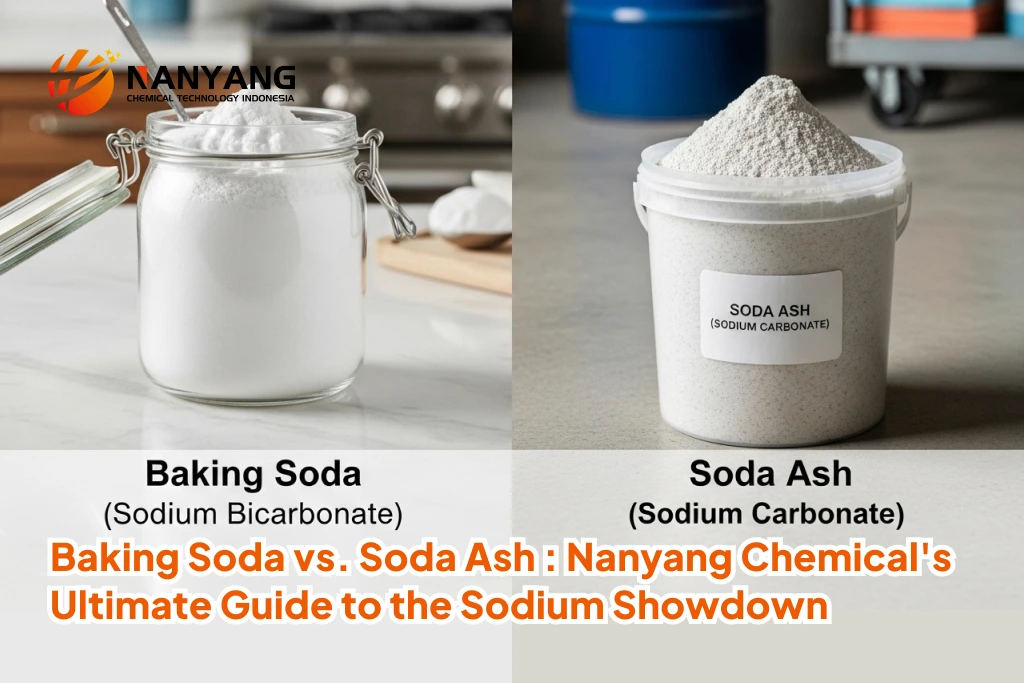
In the vast and fascinating world of chemistry, a few compounds are so essential that they become household names. Among them, two stand out for their widespread use and surprising similarities—and crucial differences. We’re talking about baking soda (NaHCO3) and soda ash (Na2CO3), two powerful sodium compounds that, despite their similar-sounding names, serve fundamentally different purposes in both our daily lives and industrial applications. This distinction is the core of our exploration. For anyone seeking clarity on the key differences between these substances, understanding the dynamic of baking soda vs soda ash is paramount.
You may know baking soda as the leavening agent that makes your cakes rise or the gentle deodorizer you keep in your refrigerator. Its mild, slightly alkaline nature makes it safe for consumption and a go-to for countless home remedies and cleaning hacks. But what about its more potent cousin? Soda ash, also known as washing soda, is a stronger, more caustic chemical. While you might not find a box of it in your pantry, it’s the unseen hero behind the glass in your windows, the detergent that cleans your clothes, and the pool chemicals that keep your water balanced. The question of soda ash versus baking soda is not just an academic one; it’s a practical inquiry that impacts everything from manufacturing to home maintenance.
At Nanyang Chemical, we understand that quality and purity are non-negotiable. We take immense pride in our role as a leading provider of these vital sodium compounds, offering products that meet the highest standards of safety and performance. Our mission is to not only supply these essential chemicals but also to educate our customers on how to use them correctly. Whether you are a large-scale manufacturer requiring industrial-grade soda ash for your production line or a homeowner in need of pure baking soda for your culinary creations and cleaning projects, the choice matters. This guide is designed to empower you with the knowledge to make that choice confidently. By diving into the chemical makeup, practical uses, and safety considerations of each, we aim to demystify the conversation around baking soda vs soda ash and showcase the immense value each brings to the table.
Table of Contents
The Chemical Lowdown : What’s the Real Difference?
To truly grasp the distinction between baking soda vs soda ash, we must look beyond their powdered, white appearance and delve into their fundamental chemical structures. While they both contain sodium and are derived from carbonic acid, the subtle difference in their molecular formula accounts for their vastly different properties and applications. This is the heart of the matter when analyzing soda ash versus baking soda.
Baking Soda: The Mild, Versatile Household Helper
Baking soda is the common name for sodium bicarbonate, with the chemical formula NaHCO3. The key to its milder nature lies in the presence of that single hydrogen atom. In an aqueous solution, sodium bicarbonate partially dissociates, releasing a sodium cation (Na+) and a bicarbonate anion (HCO3−). The bicarbonate ion is amphiprotic, meaning it can both donate and accept a proton, which gives it a buffering capacity. This property is why it is so effective at neutralizing both acids and bases without causing a dramatic pH shift.
On the pH scale, baking soda is a weak base, typically registering a pH of around 8.3-8.4 when dissolved in water. This makes it an ideal choice for applications where a gentle touch is required. In baking, for example, it reacts with acidic ingredients (like buttermilk or vinegar) to produce carbon dioxide gas, which causes baked goods to rise. This reaction is controlled and predictable. Its mild alkalinity also makes it a safe and effective cleaner for countertops, sinks, and other household surfaces, as it can cut through grease and grime without being corrosive.
Another critical property of sodium bicarbonate is its thermal decomposition. When heated to temperatures above 50°C, it breaks down into sodium carbonate (soda ash), water, and carbon dioxide. This reaction is a fascinating link between the two compounds and is a method used for their industrial production.
Soda Ash: The Potent Industrial Powerhouse
Soda ash is the common name for sodium carbonate, with the chemical formula Na2CO3. The absence of the hydrogen atom and the presence of two sodium atoms fundamentally alters its chemical behavior. In water, sodium carbonate dissociates completely into two sodium cations (2Na+) and a carbonate anion (CO32−). The carbonate ion is a much stronger base than the bicarbonate ion. It readily hydrolyzes water, producing hydroxide ions (OH−) which are responsible for the solution’s high alkalinity.
The pH of a soda ash solution is significantly higher than that of baking soda, typically ranging from 11.3 to 11.6. This strong alkalinity is what gives soda ash its power as a heavy-duty cleaner and its utility in industrial settings. It is a highly effective water softener because it reacts with calcium and magnesium ions (which cause water hardness) to form insoluble precipitates that can be filtered out. This is why it’s a key component in laundry detergents and dish soaps, helping to boost their cleaning efficacy, especially in hard water areas.
The high pH of soda ash also makes it an excellent choice for neutralizing acidic spills and adjusting the pH of large-scale chemical processes. However, this same strength is a double-edged sword. Unlike baking soda, soda ash is corrosive and can cause skin and eye irritation. Handling it requires proper protective equipment and caution. This key difference in caustic potential is a major factor in the choice between baking soda vs soda ash for a given application.
The Bottom Line: A Tale of Two Bases
So, why the confusion between soda ash versus baking soda? Both are white, crystalline powders. Both are alkaline. Both contain sodium. However, the difference in their chemical structure, specifically the presence or absence of the hydrogen atom, creates a profound divergence in their strength and applications.
- Baking soda (NaHCO3) is a weak base, designed for controlled, gentle reactions. Its primary role is to act as a buffer and a source of carbon dioxide gas for leavening.
- Soda ash (Na2CO3) is a strong base, built for powerful, large-scale reactions. Its main function is to increase pH significantly and act as a water softener.
Nanyang Chemical offers both compounds in their highest purity, understanding that choosing the right one for the job is essential. Our food-grade sodium bicarbonate ensures the safety and quality of your baked goods and home-cleaning solutions, while our industrial-grade soda ash provides the reliable power needed for manufacturing, water treatment, and heavy-duty cleaning. This detailed chemical analysis confirms that while they may share a family name, baking soda vs soda ash are two distinct and irreplaceable tools in the chemical world.
Side-by-Side Comparison : A Quick Reference Chart
Understanding the core chemical and functional differences between baking soda and soda ash can be complex. To simplify this, we’ve created a comprehensive side-by-side comparison chart. This quick reference guide will highlight the most crucial distinctions, making it easy to see at a glance why the choice between baking soda vs soda ash is so important for different applications. This comparison will directly address the user intent behind the search for soda ash versus baking soda by providing a clear, concise, and detailed breakdown.
Baking Soda vs. Soda Ash: The Ultimate Comparison
| Feature | Baking Soda (Sodium Bicarbonate, NaHCO3) | Soda Ash (Sodium Carbonate, Na2CO3) |
| Chemical Formula | NaHCO3 (Sodium Hydrogen Carbonate) | Na2CO3 (Sodium Carbonate) |
| IUPAC Name | Sodium Hydrogen Carbonate | Sodium Carbonate |
| Common Names | Baking Soda, Bicarb, Bicarbonate of Soda | Soda Ash, Washing Soda, Soda Crystals |
| pH Level | Weakly alkaline, pH of ~8.3-8.4 in a 1% solution. | Strongly alkaline, pH of ~11.3-11.6 in a 1% solution. |
| Alkalinity Strength | Mildly alkaline; acts as a buffer. | Highly alkaline; acts as a strong base. |
| Physical Appearance | Fine, white crystalline powder. | White, odorless powder; can be fine (“light”) or granular (“dense”). |
| Household Uses | Widely used: Baking (leavening agent), cleaning, deodorizing (refrigerator, carpets), non-toxic scrubbing. | Limited use: Heavy-duty laundry additive, water softening, cleaning tough stains. |
| Industrial Uses | Effervescent tablets, antacids, fire extinguishers, animal feed additive. | Extensive use: Glass manufacturing, detergent production, chemical manufacturing, water treatment, paper production. |
| Effect in Water | Dissolves easily and creates a mild alkaline solution. Used to raise Total Alkalinity in pools with minimal effect on pH. | Dissolves to create a strong alkaline solution. Primarily used to significantly raise the pH in pools and is a powerful water softener. |
| Interchangeability | Generally not a substitute for soda ash. Can be thermally decomposed into soda ash, but this is not a practical substitution for most tasks. | Generally not a substitute for baking soda. Too caustic and alkaline for most household uses, especially baking. |
| Safety & Handling | Generally considered safe for food-grade applications and direct skin contact. Non-corrosive. | More caustic and corrosive. Can cause skin and eye irritation. Requires careful handling, including gloves and eye protection. |
| Nanyang Chemical Product | High-purity, food-grade sodium bicarbonate. Perfect for culinary, cleaning, and personal care applications. | High-quality, industrial-grade soda ash (light and dense). Ideal for manufacturing, water treatment, and commercial cleaning. |
This chart is more than just a list of facts; it’s a tool for informed decision-making. The stark contrast in pH level is arguably the most critical difference, dictating the entire range of applications for each compound. For example, in pool chemistry, the distinction is clear and has a measurable impact on cost and effectiveness. As one industry expert notes, using baking soda to raise a pool’s pH can take an enormous quantity of chemical, while a much smaller amount of soda ash can achieve the same effect with less effort. However, this powerful pH boost from soda ash can also lead to cloudiness and other issues if not used carefully, a problem that is far less common with the more forgiving baking soda.
The physical form also plays a role in their use. Nanyang Chemical, for instance, offers soda ash in both “light” and “dense” forms. The lighter, finer powder dissolves more quickly and is ideal for certain chemical reactions and detergents, while the denser, more granular form is preferred in glass manufacturing because it minimizes dust and material loss in furnaces. This specialized product offering is a testament to the fact that even within the category of soda ash, different grades are needed for specific industrial processes.
The safety column in the chart is perhaps the most important for the general consumer. The non-toxic, food-safe nature of baking soda allows it to be used in countless home applications without concern. Conversely, soda ash’s corrosive properties mean it must be treated with respect and stored securely. This single safety difference fundamentally separates the two in terms of who uses them and for what purpose.
In conclusion, while the terms baking soda vs soda ash and soda ash versus baking soda are often used interchangeably by those who are unfamiliar with their properties, the reality is that they are two distinct chemical entities with unique strengths. This chart serves to clarify that distinction, providing a reliable and easy-to-digest guide to help consumers and industrial users alike choose the perfect Nanyang Chemical product for their specific needs.
Real-World Applications : Where and When to Use Each
The chemical differences between baking soda and soda ash are more than just theoretical; they dictate a fascinating and varied range of real-world applications. The user intent behind searching for baking soda vs soda ash is almost always driven by a practical need—whether it’s for a household chore or a large-scale industrial process. This section will illustrate the specific use cases for each compound, highlighting why you would choose one over the other.
Baking Soda: The Champion of the Home and Kitchen
Baking soda’s gentle nature and non-toxic properties make it an indispensable tool for everyday life. Its most famous application is, of course, in the kitchen. As a leavening agent, it is a staple in countless recipes. When combined with an acidic ingredient and moisture, its bicarbonate (HCO3−) ions react to produce carbon dioxide (CO2) gas, which creates air pockets, causing batters and doughs to rise. This is the simple yet brilliant science behind fluffy pancakes, light cakes, and airy quick breads. The use of baking soda for this purpose is a direct result of its mild alkalinity and its ability to react with acids in a controlled manner.
Beyond baking, sodium bicarbonate shines as a multi-purpose cleaner and deodorizer. Its mild abrasive quality makes it perfect for scrubbing away dirt and grime without scratching delicate surfaces like sinks, stovetops, and bathroom tiles. For removing stubborn stains from coffee mugs or kitchenware, a simple paste of baking soda and water works wonders. Its natural deodorizing power is equally impressive. An open box in the refrigerator absorbs and neutralizes strong food odors, and a sprinkle on carpets or in garbage cans helps eliminate unpleasant smells.
In personal care, baking soda is a popular ingredient in natural deodorants and DIY toothpastes due to its ability to neutralize odors and act as a gentle abrasive. It can even be used as a calming bath soak to soothe irritated skin. The reason for all these applications is simple: its low pH and safety profile. When it comes to everyday, hands-on tasks, there is no contest in the soda ash versus baking soda debate. Nanyang Chemical’s high-purity, food-grade sodium bicarbonate is the trusted choice for these diverse household applications, ensuring both safety and effectiveness.
Soda Ash: The Backbone of Modern Industry
In contrast to baking soda’s household fame, soda ash is a workhorse of industry, where its powerful properties are leveraged on a massive scale. Its high alkalinity and ability to soften water are its key strengths.
One of the most significant industrial uses of soda ash is in glass manufacturing. It is a critical component of molten glass, where it acts as a flux. By lowering the melting point of silica (the main ingredient in glass), soda ash drastically reduces the energy and time required for the melting process, making glass production more efficient and cost-effective. Without soda ash, producing everyday items like bottles, windows, and fiberglass would be significantly more expensive and energy-intensive.
Another major application is in the detergent industry. Soda ash is an essential ingredient in laundry powders and dishwashing detergents. It softens water by bonding with calcium and magnesium ions, which prevents them from interfering with the cleaning agents. The result is a more effective lather and a deeper clean, especially in areas with hard water. Its high pH also helps to saponify fats and oils, breaking down grease and tough stains on clothes and dishes. Nanyang Chemical’s industrial-grade soda ash is a key raw material for detergent manufacturers, providing the quality and consistency needed for superior cleaning products.
Soda ash also plays a crucial role in water treatment. Municipal water treatment plants use it to raise the pH of acidic water, which helps prevent corrosion of pipes and infrastructure. In swimming pools, it is the go-to chemical for raising the pH level. While baking soda can be used to raise total alkalinity, soda ash is far more effective at making a significant and rapid change to the pH itself. This is a classic example where the direct comparison of baking soda vs soda ash reveals that each is the “right tool for the job.” A pool technician needs the powerful, concentrated effect of soda ash to correct a low pH, whereas the milder baking soda is better for maintaining alkalinity without causing a sudden pH spike.
Finally, soda ash is used in the chemical industry as a fundamental building block for a wide range of other sodium-based compounds, including sodium silicates, sodium phosphates, and even the very sodium bicarbonate we use at home. This cyclical relationship—where one is used to produce the other—highlights their interconnected importance. The sheer volume and variety of its industrial applications underscore why, while baking soda is a household staple, soda ash is the silent, industrial giant.
Safety and Storage : A Nanyang Chemical Priority
When discussing the practical applications of chemical compounds, understanding their safety profiles and proper storage procedures is not just a suggestion—it’s a critical requirement. The clear distinction between baking soda vs soda ash is perhaps most evident in this area. While one is safe enough to be ingested and handled with bare hands, the other requires caution and proper protective equipment. This section will detail the safety protocols for each compound, emphasizing the critical differences that arise from their chemical properties and showcasing Nanyang Chemical’s unwavering commitment to product safety. The user’s search for soda ash versus baking soda often implicitly includes a need for this vital safety information.
Baking Soda: Safe for Home and Body
Baking soda, or sodium bicarbonate (NaHCO3), is widely recognized as a non-toxic and non-hazardous substance. Its mild alkalinity and low reactivity with most materials make it an exceptionally safe chemical for household use. This is precisely why it is a food-grade product, used in everything from baking to antacids.
- Handling: Direct contact with skin is generally harmless. In fact, many people use baking soda in personal care products, such as bath soaks and face scrubs, without any adverse effects. It is non-corrosive and does not pose a risk of chemical burns.
- Ingestion: Food-grade baking soda is safe for ingestion in small, controlled amounts. It is a common remedy for heartburn and indigestion due to its ability to neutralize stomach acid. However, excessive consumption can lead to stomach discomfort or, in rare cases, more serious electrolyte imbalances.
- Storage: Baking soda should be stored in a cool, dry place, away from moisture and strong odors. Because it can absorb smells, keeping the container tightly sealed is crucial to maintain its purity and effectiveness for cooking and deodorizing. A simple cupboard or pantry is the ideal location for storage. The low risk and easy storage of this product make it a staple in almost every kitchen, a testament to the safety inherent in baking soda vs soda ash.
Soda Ash: Handle with Care
Soda ash, or sodium carbonate (Na2CO3), is a different story entirely. Its high pH makes it a potent base and, consequently, a corrosive substance. Proper handling is absolutely essential to prevent injury. The caustic nature of soda ash is the single most significant safety differentiator in the soda ash versus baking soda debate.
- Handling: Direct contact with soda ash can cause skin irritation and burns. Contact with the eyes can be particularly dangerous, leading to severe and irreversible damage. Therefore, when handling industrial-grade soda ash, it is crucial to wear appropriate personal protective equipment (PPE), including safety goggles and chemical-resistant gloves. In industrial settings, dust masks are also recommended to avoid inhalation, as airborne particles can irritate the respiratory tract.
- Ingestion: Soda ash is not safe for ingestion. It can cause severe damage to the mouth, throat, and digestive system. In the event of accidental ingestion, immediate medical attention is required. This is why soda ash should be stored in a secure location, well out of the reach of children and pets, and clearly labeled.
- Storage: Soda ash should be stored in a tightly sealed, moisture-proof container in a cool, dry, and well-ventilated area. It should be kept separate from acids, as the combination can produce a violent reaction. Proper labeling and a designated storage space are essential for safety, especially in industrial environments where large quantities are stored.
Nanyang Chemical’s Commitment to Safety
At Nanyang Chemical, safety is our top priority. We understand that our products, from the gentle baking soda to the powerful soda ash, must be handled correctly to ensure the well-being of our customers and the environment.
- Clear Labeling: All of our products are supplied with clear, detailed labels that include chemical names, formulas, and handling warnings.
- Material Safety Data Sheets (MSDS/SDS): We provide comprehensive Safety Data Sheets for all our chemical products. These documents contain critical information on a product’s properties, potential hazards, safe handling procedures, and emergency response measures. This information is readily available to our customers to ensure they are fully informed about the products they are using.
- Quality and Purity: Our commitment to quality ensures that our products are free of contaminants that could pose unforeseen risks. Our food-grade baking soda is manufactured under strict quality controls to guarantee its purity for human consumption, while our industrial-grade soda ash is held to rigorous standards for consistent performance and predictable reactivity.
In summary, the disparity in safety between baking soda vs soda ash is a primary reason for their different applications. While one is a testament to the safety of certain chemicals for personal and household use, the other is a powerful tool that demands respect and careful handling. At Nanyang Chemical, we provide both with the assurance of the highest quality and an unwavering commitment to our customers’ safety.
Conclusion
The journey from the household pantry to the industrial plant reveals that while they may look alike, the distinction between baking soda vs soda ash is both significant and practical. This comprehensive guide has detailed their chemical makeup, real-world applications, and critical safety differences. We’ve seen that baking soda, or sodium bicarbonate (NaHCO3), is the gentle, food-safe, and versatile compound perfect for culinary endeavors, deodorizing, and light-duty cleaning. Its mild alkalinity and non-corrosive nature make it the ideal choice for everyday, hands-on tasks.
Conversely, soda ash, or sodium carbonate (Na2CO3), stands as a powerful, highly alkaline, and industrial-grade chemical. Its strength is essential for large-scale operations like glass manufacturing and as a powerful water softener in detergents. The conversation of soda ash versus baking soda is, therefore, not about which one is better, but about which one is right for the specific task at hand. Using one where the other is required can be at best ineffective and at worst, dangerous.
At Nanyang Chemical, we take pride in providing both of these essential compounds with the highest standards of purity and quality. We empower our customers to make informed choices, ensuring they have the perfect product for their needs, whether it’s for a small-scale DIY project or a major industrial process. When you need the right chemical for the job, you can trust in the quality and expertise that Nanyang Chemical delivers.