
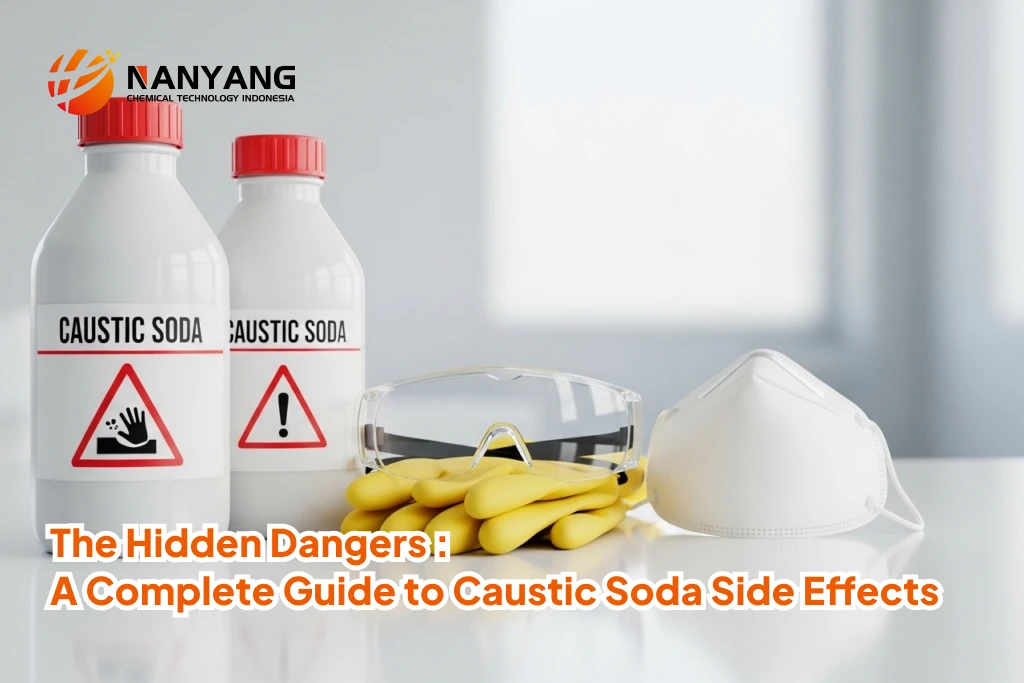
Caustic soda, also known as sodium hydroxide, is a chemical powerhouse that serves as a cornerstone for countless industries around the globe. From purifying municipal water supplies and manufacturing paper to refining petroleum and producing essential textiles, its applications are as varied as they are vital. However, the immense utility of this compound is matched by its highly corrosive and dangerous nature. It is a substance that demands the utmost respect, and a failure to understand the severe caustic soda side effects is a risk no individual or organization should ever take.
This powerful compound’s reactivity and ability to dissolve organic material make it incredibly effective in industrial processes, but also exceptionally hazardous to human health. This is not a product where a “learn-as-you-go” approach is acceptable; it is a serious responsibility that requires proactive and informed handling at every stage, from production to end-use. Exposure to caustic soda can lead to catastrophic, and in some cases, irreversible damage. The dangers are multifaceted, spanning from contact with the skin and eyes to inhalation and accidental ingestion, each with a unique set of devastating consequences.
At Nanyang Chemical, we believe that providing an essential product also comes with an unwavering commitment to safety. We recognize that our role in the global supply chain is to be more than just a provider; we are a partner in risk mitigation. Our dedication to safety begins with our meticulous manufacturing processes, ensuring that our products adhere to the highest international quality and purity standards. We go a step further by providing comprehensive and clear Material Safety Data Sheets (MSDS), alongside expert guidance on proper storage, handling, and emergency response procedures.
Our global network is designed to ensure that no matter where you are, you have access to a product backed by a steadfast commitment to care. By choosing a partner who prioritizes not only product excellence but also the well-being of its clients, you are taking a critical step toward safeguarding your team and your operations. The rest of this article will provide an essential guide to the specific dangers of caustic soda exposure, but remember: the most effective defense against the negative caustic soda side effects is a proactive approach to safety, supported by a trustworthy and knowledgeable supplier.
Table of Contents
The Immediate and Devastating Side Effects
Exposure to caustic soda, whether through a brief splash or a more prolonged incident, is never a minor event. The immediate and devastating caustic soda side effects manifest almost instantly, initiating a cascade of chemical reactions that can cause severe, life-altering, and in some cases, fatal injuries. Unlike many other irritants that cause superficial damage, the powerful corrosive properties of sodium hydroxide mean it begins to destroy human tissue upon contact, with the potential for damage to continue long after the initial exposure. Understanding the specific mechanisms of these injuries is the first and most critical step in appreciating the absolute necessity of rigorous safety protocols.
Skin Contact: The Insidious Burn
When caustic soda touches the skin, it does not create the typical coagulative necrosis burn that acids do, which often creates a visible, protective scab. Instead, it causes a unique and far more dangerous type of injury known as liquefactive necrosis. The chemical reacts with the skin’s proteins and fats in a process called saponification, essentially turning the tissue into a soft, soap-like substance. This reaction allows the chemical to penetrate deep into the underlying layers of the skin, where it continues to cause extensive damage.
The initial sensation may be a slippery or soapy feel, which can be misleading, as severe pain may be delayed by several minutes. This delayed onset of pain is one of the most insidious caustic soda side effects because it can lull a person into a false sense of security, allowing the chemical to continue its destructive work. Within minutes, the affected area will become red, swollen, and feel warm to the touch. Blisters may form, and in more severe cases, the skin can turn a deep red, black, or even a grayish color, indicating the destruction of tissue. Third-degree burns can develop rapidly, leading to the irreversible death of skin, nerve endings, and muscle tissue. The long-term consequences are just as grim, including severe scarring, permanent disfigurement, and a loss of sensation in the affected area, all of which underscore the gravity of these chemical burns.
Eye Contact: The Path to Permanent Blindness
Of all the potential caustic soda side effects, contact with the eyes is arguably the most dangerous. The delicate tissues of the eye are exceptionally vulnerable to the chemical’s corrosive action. The saponification process rapidly breaks down the fatty acids in the cornea and sclera, leading to a rapid and profound breakdown of the eye’s structure.
Symptoms are immediate and excruciating, including intense pain, a burning sensation, severe tearing, and a feeling of something being in the eye. The cornea, which should be clear, may become cloudy or opaque within moments, leading to a sudden loss of vision. If not immediately and thoroughly flushed, the damage will progress, leading to a breakdown of the iris, lens, and retina, ultimately resulting in permanent blindness. This is an absolute medical emergency where every second counts. The standard first-aid protocol is to flush the eyes with copious amounts of clean, running water for a minimum of 15 to 30 minutes while simultaneously seeking emergency medical assistance. The devastating and permanent nature of these injuries highlights why proper eye protection, such as splash-proof goggles or a full face shield, is not optional but mandatory in any environment where caustic soda is present.
Inhalation: The Silent Threat to the Respiratory System
While many think of liquid spills, inhalation of caustic soda aerosols or dust from its solid form is a very real and dangerous possibility. When inhaled, the chemical attacks the delicate mucous membranes of the nose, throat, and lungs. The immediate symptoms can include a sore throat, coughing, sneezing, and a burning sensation in the nasal passages and chest. However, the most severe caustic soda side effects related to inhalation are often delayed, making them even more insidious.
Within hours, or sometimes a day later, more serious respiratory complications can arise. The inflammation of the lungs can lead to chemical pneumonitis, and in the most severe cases, it can trigger pulmonary edema—the dangerous accumulation of fluid in the lungs, which can lead to respiratory failure and death. Chronic exposure to low levels of caustic soda dust can also cause long-term respiratory problems, including chronic bronchitis and a reduction in lung function. This silent threat underscores the importance of adequate ventilation and respiratory protection, such as a particulate respirator or self-contained breathing apparatus (SCBA), when working with the chemical, particularly in confined spaces or where dust is a risk.
Ingestion: A Life-Threatening Internal Calamity
Accidental ingestion of caustic soda, which can occur from mislabeling or improper storage, is a life-threatening event requiring immediate medical intervention. The chemical causes severe, deep, and penetrating burns to every tissue it touches on its path through the digestive system. The mouth, throat, esophagus, and stomach are all vulnerable to its destructive power.
The immediate caustic soda side effects are searing pain in the mouth, throat, and chest, along with an inability to swallow, vomiting of blood, and a general state of shock. The chemical can burn through the esophagus and stomach lining, leading to perforation and internal bleeding, which can be fatal. Survivors of ingestion often face a lifetime of medical complications. The development of esophageal strictures—the abnormal narrowing of the esophagus due to scarring—is a common long-term consequence. These strictures can make it difficult or impossible to swallow food and may require multiple surgeries and medical procedures over many years to manage. Unlike many other toxic substances, it is imperative not to induce vomiting, as this will only cause a second-pass burn to the esophagus, exacerbating the damage. The only correct action is to call for emergency medical services immediately and provide as much information as possible about the substance ingested.
The full scope of these immediate and devastating caustic soda side effects serves as a stark reminder of the chemical’s potential for harm. While its industrial utility is immense, it is a compound that demands the utmost respect and the unyielding implementation of safety measures. It is a shared responsibility of manufacturers, suppliers, and end-users to ensure that these tragic outcomes are prevented at all costs.
Long-Term Health Consequences
The catastrophic harm caused by a single, severe exposure to caustic soda is often just the beginning of a long and challenging journey toward recovery. The immediate trauma of chemical burns and internal damage sets the stage for a range of profound and lasting caustic soda side effects that can affect an individual for the rest of their life. These long-term consequences can arise from a single, catastrophic incident or from chronic, low-level exposure over an extended period. They underscore the fact that with a substance this potent, the damage does not simply disappear once the initial pain subsides.
Chronic Skin and Tissue Damage
A single, severe splash of caustic soda on the skin, if not immediately and thoroughly washed off, can cause deep-tissue burns that lead to extensive scarring. Unlike the firm, dry scars left by thermal burns, those from caustic soda are often soft, pliable, and prone to contractures—the permanent shortening of a muscle or joint. This scarring can significantly limit a person’s mobility, especially when it occurs over or near joints like the elbows, knees, or fingers. The cosmetic disfigurement can also be severe, impacting a person’s self-esteem and social interactions. Beyond the physical appearance, the nerve endings in the affected area may be permanently destroyed, leading to a complete loss of sensation, or conversely, a persistent and painful neuropathy.
For individuals in industrial or laboratory settings, repeated, low-level contact with caustic soda dust or mist can lead to a different but equally debilitating chronic condition known as dermatitis. This condition is characterized by dry, cracked, peeling, and inflamed skin. The constant irritation and breakdown of the skin’s natural barrier leave it vulnerable to further chemical exposure and bacterial infections. While not as dramatic as a severe burn, chronic dermatitis is a persistent, painful, and often frustrating condition that can severely impact a person’s quality of life and their ability to continue working in their profession.
Lingering Respiratory Issues
Even after surviving an acute caustic soda inhalation event, the long-term caustic soda side effects on the respiratory system can be devastating and irreversible. The initial chemical burns to the lining of the throat, trachea, and lungs can heal with scar tissue, permanently reducing lung capacity and function. A person who previously had no breathing problems may develop chronic respiratory conditions that require continuous medical management.
One of the most common long-term consequences is the development of chronic bronchitis, characterized by a persistent, productive cough due to the ongoing inflammation of the airways. In some cases, exposure can trigger a condition known as Reactive Airway Dysfunction Syndrome (RADS), a type of chemically induced asthma. This can lead to a lifetime of wheezing, shortness of breath, and an increased susceptibility to other respiratory irritants. For those who experienced a severe acute inhalation incident, the most serious long-term outcome is pulmonary fibrosis, where the lung tissue becomes scarred and stiff. This condition progressively worsens over time, leading to severe and unremitting shortness of breath, often requiring the use of supplemental oxygen. These conditions are not curable and stand as a permanent testament to the dangers of inadequate safety measures.
Gastrointestinal and Esophageal Complications
Perhaps the most tragic and long-lasting caustic soda side effects are those that follow accidental ingestion. While a person may survive the initial trauma, the internal burns to the esophagus and stomach can heal with extensive scar tissue. This scar tissue, being less elastic than healthy tissue, can cause a severe narrowing of the esophagus, a condition known as an esophageal stricture. The stricture makes it extremely difficult, if not impossible, for a person to swallow food or even liquids.
Living with an esophageal stricture is a constant battle. Patients often experience severe pain when swallowing and are at a high risk of choking. To manage this condition, they must undergo repeated and often painful medical procedures, such as esophageal dilation, where a balloon or other medical device is used to stretch the scar tissue and temporarily widen the passageway. In the most severe cases, surgical intervention may be required, including the removal of the damaged section of the esophagus and its replacement with a segment of the large intestine or stomach.
Beyond the physical hardship, there is a sinister long-term risk. Individuals who have suffered caustic burns to their esophagus have a significantly increased risk of developing esophageal cancer, often decades after the initial injury. The constant irritation and inflammation of the scarred tissue create an environment where cancerous cells can more easily form. This looming threat means that survivors of ingestion must live with a heightened sense of vigilance and undergo regular medical screenings for the rest of their lives.
In essence, the long-term caustic soda side effects serve as a grave reminder that prevention is the only truly effective cure. The commitment to providing the safest possible product is not merely a marketing claim but a fundamental ethical responsibility. At Nanyang Chemical, we understand that our role extends far beyond the point of sale. We are dedicated to providing our clients with a superior product, while also arming them with the knowledge and resources necessary to protect their people and their assets from harm. The long-term costs, both human and financial, of a single accident are simply too high to ignore.
Your Safety Starts with Your Supplier : The Nanyang Chemical Difference
Caustic soda is a powerful and essential compound, but its inherent dangers mean that its safe use is a non-negotiable priority for any organization. While rigorous in-house safety protocols, comprehensive employee training, and the correct use of personal protective equipment are all vital, your first and most effective line of defense against the serious caustic soda side effects begins with a single choice: your supplier. Mitigating risk starts at the source. Choosing a partner who is dedicated to quality, transparency, and safety transforms the supplier-client relationship from a simple transaction into a critical strategic partnership. This is the core principle behind The Nanyang Chemical Difference.
A Foundation Built on Purity and Quality
The integrity of a chemical product is the foundation of its safety. Any impurities or inconsistencies in a batch can lead to unpredictable reactions, making safe handling more complex and increasing the risk of accidents. At Nanyang Chemical, our commitment to quality is absolute. We employ rigorous, multi-stage quality control processes that ensure every batch of caustic soda we produce meets and often exceeds stringent international standards, including ISO 9001 certification. Our state-of-the-art laboratories and highly skilled technical teams meticulously test for purity and concentration, guaranteeing a consistent product. This meticulous attention to detail is not just about product performance; it is a fundamental safety measure. By providing a product of predictable purity, we empower our clients to implement consistent safety protocols without the risk of unexpected chemical behavior. This proactive approach to quality control is a significant way we help to prevent the tragic caustic soda side effects that can arise from an unreliable supply.
Beyond the Barrel: Comprehensive Safety Documentation and Support
A truly responsible supplier’s contribution extends far beyond the physical delivery of the product. The most critical information often accompanies the shipment in the form of robust safety documentation. At Nanyang Chemical, we provide a meticulously detailed and globally compliant Material Safety Data Sheet (MSDS) or Safety Data Sheet (SDS) with every product. We consider this document to be a vital component of our service. It’s a comprehensive guide that provides clear and actionable information on safe handling, proper storage conditions, and the specific personal protective equipment (PPE) required. It also details the correct first-aid procedures for every type of exposure—ingestion, inhalation, and skin or eye contact—providing a clear roadmap for mitigating the caustic soda side effects in a medical emergency.
Our commitment to safety is a partnership. We don’t just hand over a document; we offer ongoing technical support and expert guidance to help our clients understand and implement the necessary safety protocols. This commitment to education is invaluable, ensuring that clients are not only equipped with a high-quality product but also with the knowledge to handle it with the utmost confidence and care. This dedication to information sharing is what elevates our service and helps our clients build a culture of safety within their own operations.
A Global Supply Chain with Consistent Safety Standards
For multinational corporations and global operations, the integrity of the supply chain is paramount. The Nanyang Chemical Difference is our ability to deliver the same high level of quality, consistency, and safety support to every corner of the world. We have invested heavily in a robust and secure global logistics network that ensures our products are transported and stored in full compliance with international safety regulations. Our transportation partners are vetted for their expertise in handling hazardous materials, and our packaging is designed to prevent spills and leaks, safeguarding both our clients and the environment.
Regardless of whether our caustic soda is being delivered to a manufacturing plant in Southeast Asia, a water treatment facility in Europe, or a chemical processing unit in the Americas, our clients can trust that they are receiving a product and service that adheres to the same stringent safety standards. This global consistency provides peace of mind and simplifies safety compliance for companies with worldwide operations. By maintaining a single, uncompromising standard across all markets, we eliminate variability and ensure that our clients are always prepared to prevent and address any potential caustic soda side effects, no matter their location.
In short, your supplier is more than a vendor; they are a critical partner in your safety strategy. By choosing Nanyang Chemical, you are selecting a company that understands the profound responsibility that comes with providing powerful chemicals. We are committed to empowering our clients with not just a superior product, but with the knowledge, support, and unwavering dedication to safety that are essential to preventing accidents and protecting people. We believe that a commitment to safety is a commitment to excellence, and that is a difference you can depend on.
Conclusion
The dangers of caustic soda are undeniable, and the potential caustic soda side effects on the human body can be severe and life-altering. As we’ve explored, from immediate chemical burns to long-term chronic respiratory and gastrointestinal issues, the risks are substantial. Yet, the chemical’s critical role in a wide array of global industries means it is an indispensable part of our modern economy. This duality makes a commitment to safety an ethical imperative for every company involved in its handling.
Ultimately, preventing accidents is a shared responsibility that goes far beyond a single individual or a single product. It starts with the manufacturer and permeates through every step of the supply chain. At Nanyang Chemical, our mission is to be a leader not just in chemical production, but in chemical care. We are committed to providing the purest, most consistent product while ensuring our clients are fully equipped with the knowledge and support they need to maintain a safe working environment. By partnering with a supplier who puts safety first, you are taking the most proactive and effective step toward protecting your people and your future from harm. It’s a commitment you can trust, because when it comes to safety, there can be no compromises.