
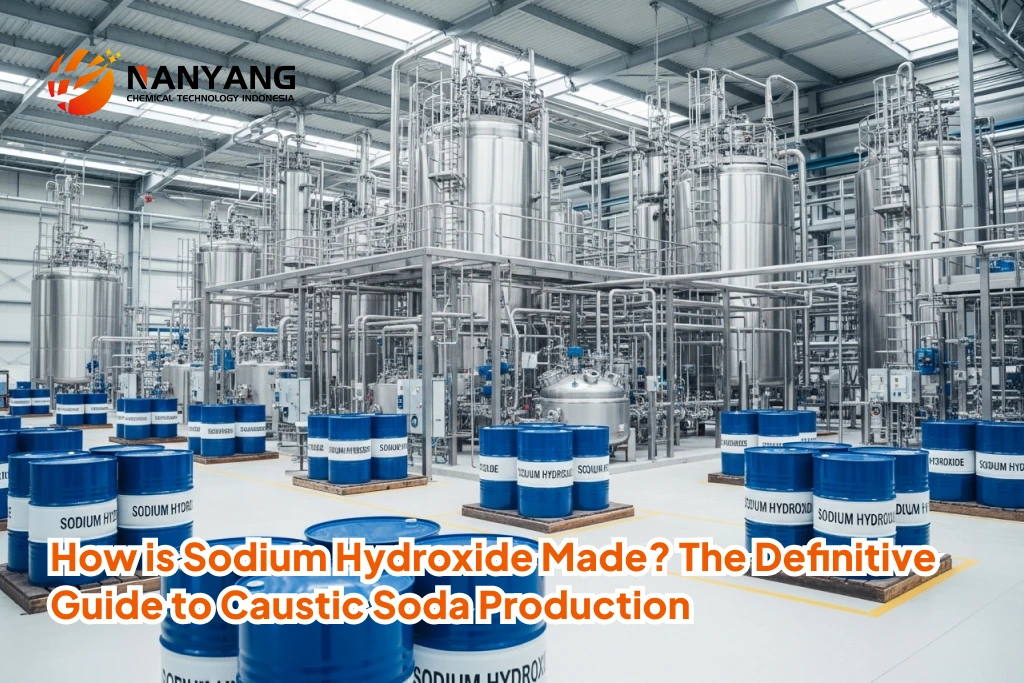
Few chemicals are as fundamental to modern industry and daily life as sodium hydroxide (NaOH). This powerful inorganic compound, commonly known as caustic soda or lye, is an extremely strong alkaline substance. It’s a foundational building block for countless processes and products that we rely on without a second thought. Its versatility stems from its highly reactive nature, making it a critical player in chemical synthesis. From the simple act of cleaning a clogged drain to the intricate manufacturing of textiles, paper, and even food products, the presence of sodium hydroxide is widespread.
In the pulp and paper industry, for example, it’s used to break down wood into pulp, a process that separates the cellulose fibers from the lignin. For water treatment, it’s a key agent for adjusting pH and neutralizing acidic contaminants. Its use extends to the production of soaps and detergents, where it’s a primary ingredient in the saponification process that turns fats and oils into soap. It’s also utilized in the refining of petroleum, the manufacturing of rayon and other synthetic fibers, and even in food processing—think about how it’s used to cure olives or give pretzels their characteristic sheen. The applications are a testament to its indispensable nature, making it a truly “essential chemical.”
Given its profound impact, it’s natural to wonder how is sodium hydroxide made? The answer lies in a highly controlled, energy-intensive process that transforms a simple and abundant raw material—common salt—into this valuable compound. While it may seem like a complex transformation, the core principle has been understood for over a century. The production of sodium hydroxide is a prime example of industrial-scale electrochemistry, a field that harnesses electricity to drive non-spontaneous chemical reactions.
The modern manufacturing process is a marvel of engineering, a far cry from earlier, less efficient methods. It involves the electrolysis of a brine solution (salt dissolved in water) to break down the sodium chloride and water molecules into their constituent parts. This process yields not just sodium hydroxide, but also valuable by-products like chlorine gas and hydrogen gas, making its production part of the larger chlor-alkali industry. As we delve deeper, we’ll explore the various methods that have evolved to optimize this process, each with its own advantages in terms of purity, efficiency, and environmental impact.
Table of Contents
The Core Chemical Reaction : Electrolysis of Brine
Electrolysis of brine is the foundational and most widely used method to explain how is sodium hydroxide made today. This industrial process, a cornerstone of the global chlor-alkali industry, uses electrical energy to drive a non-spontaneous chemical reaction that separates the components of a concentrated saltwater solution. The process is not just about creating a single product; it is a meticulously controlled system that produces three highly valuable chemicals: sodium hydroxide (NaOH), chlorine gas (Cl2), and hydrogen gas (H2).
At its core, electrolysis is the decomposition of a substance by passing an electric current through it. In this case, the substance is brine, which is a highly concentrated aqueous solution of sodium chloride (NaCl). The setup consists of an electrolytic cell containing two electrodes: a cathode (the negative electrode) and an anode (the positive electrode), both immersed in the brine solution and connected to a direct current (DC) power source.
The Chemistry at the Electrodes
The elegance of the process lies in the specific reactions that occur at each electrode. When the electric current is applied, the ions in the solution migrate toward the oppositely charged electrodes. The brine solution contains four primary species: sodium ions (Na+), chloride ions (Cl−), and, to a very small extent from the auto-ionization of water, hydrogen ions (H+) and hydroxide ions (OH−). The voltage applied to the cell is carefully controlled to ensure that the desired reactions, known as half-reactions, take place.
1. The Anode Reaction (Oxidation)
The anode is the positive electrode, and it attracts the negatively charged anions. In the brine solution, this is primarily the chloride ion (Cl−). At the anode, these ions undergo oxidation, a process defined by the loss of electrons. Each chloride ion gives up one electron to the anode, becoming a neutral chlorine atom. Two chlorine atoms then immediately bond to form a molecule of chlorine gas, which bubbles away from the anode.
The half-reaction at the anode is: 2Cl−(aq)→Cl2(g)+2e−
This reaction is highly favored because the concentration of chloride ions in the brine is extremely high. The resulting chlorine gas is a powerful oxidizing agent with widespread applications in disinfectants, bleaching, and the manufacturing of plastics like PVC.
2. The Cathode Reaction (Reduction)
The cathode is the negative electrode, and it attracts the positively charged cations. In the brine, both sodium ions (Na+) and hydrogen ions (H+) are attracted to the cathode. However, a key principle of electrolysis dictates that the species that is more easily reduced (i.e., has a higher reduction potential) will react first. In this scenario, water is more readily reduced than sodium ions. Water molecules, therefore, are reduced at the cathode, gaining electrons from the electrode. This process breaks the water molecules, forming hydrogen gas (H2) and hydroxide ions (OH−).
The half-reaction at the cathode is: 2H2O(l)+2e−→H2(g)+2OH−(aq)
This reaction produces the other two crucial products of the chlor-alkali process: hydrogen gas, a clean-burning fuel and important industrial reactant, and hydroxide ions, which are the building blocks of sodium hydroxide.
The Formation of Sodium Hydroxide
While the reduction of water at the cathode produced hydroxide ions, the sodium ions (Na+) that were attracted to the cathode were simply “spectator ions” in that specific half-reaction. They remained in the solution. However, as the electrolysis proceeds, the concentration of hydroxide ions in the cathode compartment increases. These newly formed hydroxide ions readily combine with the spectator sodium ions to form the final product, sodium hydroxide (NaOH). This compound remains dissolved in the water as an aqueous solution.
The combination reaction is: Na+(aq)+OH−(aq)→NaOH(aq)
The Complete Picture
By combining the two half-reactions and the subsequent formation of the final product, we arrive at the complete, balanced chemical equation for the electrolysis of brine:
2NaCl(aq)+2H2O(l)electrolysis2NaOH(aq)+H2(g)+Cl2(g)
This single equation elegantly summarizes the entire process and reveals why the chlor-alkali process is so vital. It transforms two abundant and inexpensive raw materials—salt and water—into three commercially significant chemicals.
The Problem of Purity and Separation
While the fundamental chemistry is clear, the real challenge for industrial producers lies in managing the products. The products of the electrolysis—chlorine gas, hydrogen gas, and sodium hydroxide—are all highly reactive. If they are allowed to mix, a series of side reactions can occur that would contaminate the final products and pose significant safety risks. For instance, chlorine gas and sodium hydroxide can react to form sodium hypochlorite (NaClO), the main ingredient in household bleach. This is great if you want to make bleach, but disastrous if you are trying to produce high-purity caustic soda.
Therefore, the key engineering challenge for any plant focused on how is sodium hydroxide made is to design an electrolytic cell that effectively separates the anode and cathode compartments, ensuring that the desired products can be collected individually without contamination. The next sections will explore the different technological solutions—from older, less efficient methods to the modern, sustainable processes—that have been developed to overcome this critical challenge.
A Journey Through Production Methods
The fundamental process of electrolysis of brine, as detailed in the previous section, is the universal scientific principle behind all modern sodium hydroxide production. However, the true engineering challenge—and the key to understanding how is sodium hydroxide made today—lies in the design of the electrolytic cell itself. The need to separate the highly reactive products (NaOH, Cl2, and H2) led to a century-long journey of technological innovation, resulting in three distinct industrial methods, each with its own advantages, disadvantages, and environmental footprint.
The Diaphragm Cell Process
Historically, one of the earliest large-scale solutions to the product separation problem was the diaphragm cell. This technology relies on a porous, permeable diaphragm—originally made of asbestos, but now often a polymer-based material—to divide the electrolytic cell into two distinct compartments: the anode chamber and the cathode chamber.
The process begins with saturated brine being fed continuously into the anode compartment. As the current is applied, chlorine gas is produced at the anode. The brine then flows through the diaphragm into the cathode compartment. The diaphragm’s porosity is carefully controlled to allow the passage of the brine solution while partially restricting the backflow of the hydroxide ions formed at the cathode. At the cathode, water molecules are reduced to produce hydrogen gas and hydroxide ions (OH−), which then combine with the sodium ions (Na+) that have passed through the diaphragm to form sodium hydroxide.
The product collected from the cathode chamber is a dilute, but complex, mixture. It contains not only sodium hydroxide but also a significant amount of unreacted sodium chloride. This is the primary drawback of the diaphragm method; the final NaOH product is of lower purity and must undergo a subsequent, energy-intensive purification stage. This involves evaporating a large volume of water to increase the concentration of the sodium hydroxide. During this evaporation, the solubility of the remaining salt decreases, causing it to crystallize out of the solution. This process is effective at improving purity, but it is costly in terms of energy and leaves a product that still contains a small, but measurable, amount of residual salt. Furthermore, the historical use of asbestos posed a severe health and safety risk to workers, a factor that has driven its replacement with safer polymeric materials in newer plants.
The Mercury Cell Process
The mercury cell process represented a major leap forward in achieving product purity. Instead of relying on a physical diaphragm, this method uses a flowing pool of liquid mercury as the cathode. This unique design completely sidesteps the product contamination issues faced by the diaphragm cell and offers a clear answer to how is sodium hydroxide made with exceptional purity.
The process occurs in two main stages. In the first stage, the electrolysis itself takes place within a large, shallow cell. Brine is passed over a flowing mercury cathode. At the anode, chlorine gas is produced just as in the other methods. However, at the mercury cathode, the reduction is different: the sodium ions (Na+), rather than the water, are reduced. The sodium atoms dissolve into the mercury to form a sodium-mercury amalgam (Na(Hg)). This amalgam is then continuously siphoned off and moved to a separate chamber called a “decomposer.”
In the second stage, the amalgam is reacted with pure water in the decomposer. The reaction is simple and highly efficient, producing a very pure, concentrated solution of sodium hydroxide and hydrogen gas. The mercury is regenerated and recycled back to the electrolytic cell, closing the loop.
This process yielded the highest purity caustic soda available for many years, free from any chloride contamination. However, its significant and well-documented environmental and health hazards have led to its global phase-out. The risk of mercury vapor release, accidental spills, and the potential for environmental contamination has made this method largely obsolete in modern manufacturing, a critical evolution in the answer to how is sodium hydroxide made.
The Membrane Cell Process
The membrane cell process is the most modern, energy-efficient, and environmentally friendly technology available today. It represents a synthesis of the best aspects of the previous two methods, offering the high purity of the mercury cell without any of its toxic liabilities. The key to this process is the ion-exchange membrane, a sophisticated polymer material that acts as a perfect selective barrier. This membrane divides the electrolytic cell into two chambers.
The membrane is designed to be permeable only to positively charged ions, specifically the sodium ions (Na+). Negatively charged ions, like chloride (Cl−), are completely blocked. In the anode chamber, purified brine is introduced, and chlorine gas is produced. The sodium ions are drawn through the membrane into the cathode chamber, but the chloride ions are left behind. In the cathode chamber, pure water is fed in. Here, the water molecules are reduced, yielding hydrogen gas and hydroxide ions (OH−). The sodium ions that have passed through the membrane then immediately combine with these newly formed hydroxide ions to create a very clean and concentrated solution of sodium hydroxide.
This elegant solution provides a perfect separation of the products. The final caustic soda solution is exceptionally pure, free from any residual salt contamination. The membrane cell process is also the most energy-efficient of the three methods, consuming less electricity to produce the same amount of product. Its adoption has marked a new era in the chemical industry, prioritizing both product quality and environmental sustainability. This is now considered the gold standard and the definitive answer to the question, how is sodium hydroxide made on an industrial scale. The journey from the imperfect diaphragm to the hazardous mercury cell and finally to the clean, efficient membrane cell highlights the continuous quest for cleaner, safer, and more sustainable industrial processes.
Nanyang Chemical’s Commitment to Excellence : The Membrane Cell Process
After exploring the historical evolution of production methods, it becomes clear that the question of how is sodium hydroxide made has evolved from a simple chemical process to a critical consideration of safety, efficiency, and environmental responsibility. The journey from the imperfect diaphragm cell and the hazardous mercury cell has culminated in a single, modern standard: the Membrane Cell Process. This technology represents the definitive answer for any manufacturer committed to a cleaner, safer, and more sustainable future. This commitment is the very foundation of Nanyang Chemical’s operational philosophy. We don’t just produce a chemical; we produce a promise of unparalleled quality, forged through a process that sets the global benchmark for excellence.
The Gold Standard for Purity and Performance
The Membrane Cell Process is the pinnacle of chlor-alkali technology, and Nanyang Chemical has invested significantly in its implementation. The core of this system is a sophisticated ion-exchange membrane, a highly engineered polymer that acts as an impermeable barrier to all but one specific ion. In our process, this membrane meticulously allows only positively charged sodium ions (Na+) to pass from the anode chamber to the cathode chamber. All other species—including the negative chloride ions (Cl−) and water molecules—are completely blocked.
This elegant selectivity is the secret to producing the purest sodium hydroxide available on the market today. Unlike the diaphragm process, which results in a saline-contaminated product, our final caustic soda solution is virtually free of any chloride impurities. This is a critical advantage for our customers in sensitive industries such as food processing, pharmaceuticals, and electronics manufacturing, where trace contaminants can compromise product integrity and performance. The consistently high purity of our product ensures that our customers’ processes run more smoothly and their end products meet the most stringent quality standards.
Efficiency and Environmental Stewardship: A Non-Negotiable Commitment
Beyond purity, our choice of the Membrane Cell Process is a testament to our unwavering commitment to environmental stewardship and operational efficiency. When considering how is sodium hydroxide made from a sustainability perspective, the differences between the technologies are stark.
The Membrane Cell Process is the most energy-efficient of all the available methods. It operates at a lower voltage than older technologies, which translates directly into a significant reduction in electricity consumption per unit of product. This not only lowers our operational costs but, more importantly, reduces our carbon footprint. At Nanyang Chemical, we believe that responsible manufacturing means minimizing our impact on the planet, and our investment in this technology is a clear demonstration of that belief.
Furthermore, this process completely eliminates the need for hazardous materials that were central to older methods. The mercury cell, while producing pure caustic soda, posed an unacceptable risk of mercury emissions and contamination, leading to widespread industrial and environmental disasters. Our modern facility, by contrast, operates without any of these toxic materials, ensuring the safety of our employees, our community, and the global ecosystem. By choosing the Membrane Cell Process, we have made a powerful statement: that industrial excellence and environmental responsibility can, and must, go hand in hand.
A Partnership Built on Trust and Reliability
Nanyang Chemical’s commitment extends far beyond the technology itself. Our state-of-the-art facility is a showcase of precision engineering and automation, overseen by a team of highly skilled chemists and engineers. Every stage of our production, from the purification of the raw brine to the final quality assurance of the product, is meticulously monitored to ensure consistency and reliability. This relentless focus on quality control means that when you source from Nanyang Chemical, you receive a product that is not just pure, but consistently so, batch after batch.
We understand that a reliable supply chain is critical to our customers’ operations. Our efficient and optimized process guarantees a stable and dependable supply of sodium hydroxide, giving our partners the confidence they need to meet their production goals without interruption. When the question of how is sodium hydroxide made arises, our customers know the answer is not just a chemical equation, but a promise of quality, sustainability, and trust. Nanyang Chemical is more than a supplier; we are a partner dedicated to supporting our customers’ success with the best product, produced in the best way.
In conclusion, our embrace of the Membrane Cell Process is not merely a business decision—it is a reflection of our core values. We are proud to lead the industry by demonstrating that profitability and responsibility are not mutually exclusive. We believe the future of chemical manufacturing is clean, efficient, and sustainable, and at Nanyang Chemical, that future is already here.
Conclusion
In the final analysis, the journey to understand how is sodium hydroxide made reveals more than just a chemical process; it showcases the evolution of an entire industry. From the early, less-efficient methods to the clean, modern technology available today, the production of this essential chemical has become a powerful example of how industrial innovation can align with environmental responsibility. The transition from processes that relied on hazardous materials like asbestos and mercury to the cutting-edge Membrane Cell technology is a testament to the industry’s commitment to safety, purity, and sustainability.
At Nanyang Chemical, we have not only embraced this technological revolution but have positioned ourselves at its forefront. Our investment in the Membrane Cell Process is a direct reflection of our core values—a belief that delivering a superior product and protecting our planet are not mutually exclusive goals. This choice ensures that our sodium hydroxide is of the highest possible purity, providing our partners in critical industries with a product they can trust. When you choose Nanyang Chemical, you are not just acquiring a high-quality chemical; you are forming a partnership with a company that is dedicated to excellence and committed to a sustainable future. Our products are a direct result of our principles, proving that the best way to do business is to do it right.