
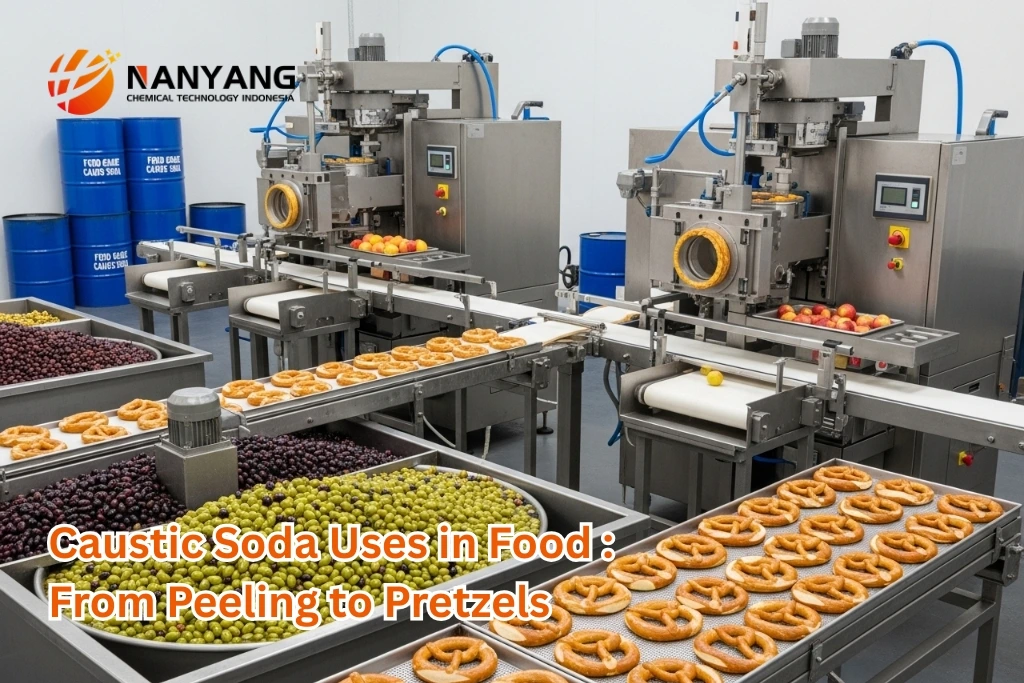
In the vast and intricate world of food manufacturing, a safe, high-quality end product is the result of a meticulously controlled process. While consumers are familiar with ingredients like sugar, flour, and spices, few are aware of the essential processing aids that work behind the scenes to create the textures, colors, and safety standards we have come to expect. Among these, few compounds are as critical and yet as misunderstood as caustic soda.
Caustic soda, more formally known as sodium hydroxide (NaOH), is a powerful alkaline chemical with a wide range of industrial applications, from paper production to water treatment. Its name often evokes an image of a harsh and corrosive substance, which, in its industrial form, is accurate. However, the purpose of this article is to shed light on the specific and highly regulated caustic soda uses in food. When sourced as a food-grade product and applied under stringent, scientific protocols, this chemical compound transforms from a basic industrial agent into a crucial culinary catalyst. It is an indispensable processing aid that facilitates several key functions that are otherwise difficult or impossible to achieve.
The journey of many beloved foods, from a crunchy pretzel to a rich, dark piece of chocolate, is inextricably linked to the precise application of food-grade sodium hydroxide. Its applications are as diverse as they are surprising, enabling food producers to achieve consistent quality and efficiency on a global scale. From the delicate process of peeling fruits and vegetables to the vital task of sanitizing production equipment, its role is often an unseen but fundamental pillar of modern food science.
The distinction between industrial-grade and food-grade caustic soda is paramount. Food-grade products, like those supplied by Nanyang Chemical, are manufactured to the highest standards of purity, with controlled limits on impurities to ensure safety and compliance with international regulations. This commitment to quality is the foundation upon which its beneficial applications are built, guaranteeing that the end product is not only delicious but also safe for consumption. This introduction will explore these transformative caustic soda uses in food, demystifying its role and highlighting why it is considered an essential component for innovation, quality, and safety in the global food industry.
Table of Contents
The Secret to Signature Flavors and Textures
In the complex symphony of food science, where chemistry and artistry converge, some of the most beloved and distinctive characteristics of our favorite foods are not accidental. They are the direct result of a carefully controlled process utilizing specialized ingredients. Among these, food-grade caustic soda, or sodium hydroxide, stands out as a fundamental agent for engineering the signature flavors, colors, and textures that define iconic culinary products around the world. The caustic soda uses in food are not merely for processing; they are at the very heart of creating a unique sensory experience.
The glossy, mahogany crust of a perfectly baked pretzel or the signature chewy texture of a traditional bagel are not achieved by baking soda alone. They are the direct result of a crucial step: a quick dip in a dilute, hot lye solution. This seemingly simple pre-baking treatment is a cornerstone of authentic pretzel and bagel production. The high alkalinity of the lye solution immediately begins to break down the proteins and starches on the surface of the dough. As the pretzel or bagel enters the scorching heat of the oven, this altered surface undergoes an intensified version of the Maillard reaction—a chemical reaction between amino acids and reducing sugars that gives browned food its distinctive flavor. Unlike the milder effects of a simple baking soda bath, the lye solution creates a profound and rapid browning, resulting in that characteristic deep color and the uniquely savory, slightly alkaline flavor profile that defines a true lye pretzel. Without this precise application, the resulting product would be a bland, pale, and unremarkable bread roll. The success of this process hinges on the purity and consistency of the sodium hydroxide used, a factor where suppliers like Nanyang Chemical, with their stringent quality control, become indispensable partners for manufacturers.
Beyond the world of baked goods, caustic soda plays a transformative role in rendering a naturally inedible fruit into a staple of Mediterranean cuisine: the olive. In its raw form, a fresh olive is intensely bitter due to a natural compound called oleuropein. For centuries, traditional methods of debittering involved a lengthy process of repeated brining and washing. Modern, industrial olive processing has dramatically streamlined this process through the controlled use of a dilute caustic soda solution. The alkaline bath hydrolyzes the oleuropein, effectively breaking down the bitter glucoside and making the olive palatable. This treatment is a masterclass in precision; the olives must be soaked for a carefully calculated duration, and the concentration of the solution must be exactly right to remove the bitterness without damaging the fruit’s structure. After treatment, the olives are thoroughly rinsed to remove any residual lye, ensuring the final product is perfectly safe and delicious. The global olive industry relies on a consistent and pure supply of food-grade caustic soda to guarantee that millions of jars and cans of olives, from green to black, meet the same high standard of flavor and quality.
Another prime example of caustic soda uses in food is the “Dutching” process in the production of cocoa and chocolate. Discovered by Dutch chemist Coenraad van Houten in the 19th century, this method involves treating cocoa beans or nibs with an alkalizing agent. Naturally, cocoa beans are quite acidic, giving raw cocoa a sharp, slightly bitter taste. The application of caustic soda neutralizes this acidity, resulting in a number of desirable changes. The flavor becomes milder, with a fuller, more rounded profile, while the color deepens significantly, turning from a reddish-brown to a rich, dark cocoa powder. This process is essential for producing the dark chocolate and cocoa powders used in a variety of desserts, from classic brownies to signature dark chocolate beverages. The ability to control the acidity and color is a powerful tool for confectioners and food manufacturers, allowing them to create a wide array of products with distinct flavor and visual characteristics. For an application where consistency is key to a brand’s identity, the quality of the alkalizing agent is non-negotiable, making a trusted supplier of food-grade chemicals, such as Nanyang Chemical, an integral part of the supply chain for cocoa processors worldwide.
Furthermore, caustic soda contributes to the unique characteristics of a number of other products. It is used to achieve the characteristic yellow color and desired chewy texture in certain types of noodles, and it can be used to treat corn for masa flour, a key ingredient in tortillas and other Latin American dishes. These diverse applications underscore a fundamental principle: when it comes to food production, processing aids are not just about making a product faster or cheaper; they are about making it better, more consistent, and uniquely satisfying. Each of these applications—from the pretzel’s crust to the olive’s lack of bitterness and the cocoa’s dark hue—is a testament to the power of food science and the precise application of a high-quality product. In this landscape, the choice of a chemical partner is critical. For global manufacturers looking to achieve culinary excellence and maintain consumer trust, a supplier like Nanyang Chemical, with its commitment to purity and reliability, is a key ingredient in their recipe for success.
A Foundation of Efficiency and Quality Control
While the remarkable ability of food-grade caustic soda to create unique textures and flavors is a testament to its versatility, its role in the food industry is far more foundational. At its core, the caustic soda uses in food are centered on a commitment to operational efficiency, product consistency, and unyielding quality control. In a global market where demand is high and safety is non-negotiable, manufacturers rely on this powerful chemical to streamline processes, minimize waste, and ensure every batch of product meets stringent specifications. It is a workhorse that operates behind the scenes, providing the chemical backbone for modern, large-scale food production.
One of the most significant applications of caustic soda is in the highly efficient process of lye peeling. Historically, peeling fruits and vegetables like potatoes, peaches, tomatoes, and even root vegetables was a labor-intensive, time-consuming, and often wasteful process. Manual peeling and abrasive mechanical peelers resulted in inconsistent products and significant loss of valuable flesh just beneath the skin. The innovation of lye peeling revolutionized this process. Fruits and vegetables are passed through a hot bath of a carefully diluted caustic soda solution. The high alkalinity of the solution reacts with the outer layers of the skin, softening and dissolving them without penetrating the core of the fruit or vegetable. The product then passes through a series of high-pressure water jets that easily wash away the softened skin and any residual chemical. The entire process takes only a few minutes, drastically reducing labor costs and, more importantly, minimizing product loss. This method ensures a consistently clean-peeled product with a smooth surface, which is crucial for subsequent processing steps, such as dicing, canning, or freezing.
The efficiency of lye peeling is not just about speed; it is also about quality. The quick and uniform removal of the skin helps to prevent enzymatic browning that can occur when the inner flesh is exposed to air for prolonged periods. This application is a perfect example of how the right chemical, sourced from a reliable supplier like Nanyang Chemical, can serve as a catalyst for a more sustainable and economically viable production model.
The precise control of pH is another cornerstone of modern food manufacturing, and here again, caustic soda is an indispensable tool. The pH level of a food product—whether it is acidic, neutral, or alkaline—is a critical factor that affects its flavor, texture, and, most importantly, its shelf life and safety. For instance, in the production of certain sauces, beverages, and dairy products, maintaining a specific pH is essential to prevent the growth of harmful bacteria and mold. It can also influence the thickening properties of starches or the stability of emulsions. As a strong base, food-grade sodium hydroxide can be added in minute, controlled quantities to raise the pH level of a product that is too acidic. This is a common practice in products where an acidic taste is undesirable or where pH needs to be stabilized for preservation purposes. The ability to fine-tune and hold a product at a consistent pH level is a key aspect of quality assurance. Manufacturers rely on pure, consistent chemicals to ensure that their pH adjustments are accurate and predictable with every batch. Nanyang Chemical’s commitment to producing a consistently high-quality product provides the reliability that manufacturers need to meet tight quality specifications and regulatory requirements on a global scale.
Finally, one of the most vital but often overlooked caustic soda uses in food is its role in sanitation and hygiene. The most advanced food processing facilities today utilize sophisticated “Clean-in-Place” (CIP) systems. These systems are designed to clean the interior surfaces of pipes, tanks, and processing equipment without the need for disassembly. At the core of a CIP system’s effectiveness is a powerful cleaning agent, and a heated caustic soda solution is a primary choice. Its high alkalinity enables it to break down and saponify fats and oils, while also denaturing and dissolving proteins that can accumulate on surfaces. These residues, if left untreated, can serve as breeding grounds for bacteria and other pathogens, leading to contamination and costly product recalls. The use of caustic soda in CIP systems ensures that all equipment is thoroughly cleaned and sanitized, leaving it ready for the next production run. This proactive approach to hygiene is a non-negotiable requirement for adherence to global food safety standards and is a testament to the fact that caustic soda, when used correctly, is a foundational element in a company’s commitment to public health.
The collective value of these applications—from the efficiency of lye peeling and the precision of pH control to the critical importance of sanitation—cannot be overstated. They form the pillars of a modern, streamlined, and safe food production process. Each use case demonstrates that food-grade caustic soda is not a novelty but a strategic chemical asset that empowers manufacturers to produce high-quality, consistent, and safe food products at scale. For the industry, the reliance on a supplier that can provide a consistently pure and reliable product is paramount. Companies like Nanyang Chemical, by providing the very foundation for these processes, act as silent partners in the global food supply chain, helping to ensure that the food we consume is of the highest possible quality.
The Unsung Hero of Food Safety and Hygiene
While the transformative power of food-grade caustic soda on flavor and texture captures the imagination, its most critical and non-negotiable role lies in an arena far removed from consumer-facing qualities: food safety and hygiene. In an industry governed by strict regulations and consumer trust, the integrity of every piece of equipment and every surface is paramount. It is here that one of the most vital caustic soda uses in food comes to the fore, quietly acting as an essential line of defense against contamination, pathogens, and product recalls.
The modern food processing environment is built on the principle of cleanliness. In large-scale operations, manually cleaning every pipe, tank, valve, and filler head is not only inefficient but also unreliable. This has led to the widespread adoption of automated Clean-in-Place (CIP) systems. These sophisticated, computer-controlled systems allow manufacturers to clean and sanitize the interior surfaces of their equipment without disassembling it. At the heart of most CIP systems is a high-pH cleaning solution, and for this purpose, a heated, dilute solution of food-grade caustic soda is the gold standard.
The effectiveness of caustic soda as a cleaning agent is rooted in its unique chemistry, which allows it to break down the most common types of food residues. The first of these is its powerful ability to perform saponification. Fats and oils, which are ubiquitous in food production from dairy to meat processing, are not easily rinsed away with water alone. When they come into contact with a strong alkali like caustic soda, they undergo a chemical reaction that converts them into soap. This process makes the once-insoluble fats and oils water-soluble, allowing them to be effortlessly rinsed from surfaces, preventing the buildup of greasy films that can harbor bacteria.
Equally important is its capacity to denature proteins. Proteins are a major component of food residues and can form stubborn, resilient films on surfaces. The high alkalinity of the caustic soda solution breaks down the complex structure of these proteins, causing them to unfold and become soluble. This not only makes them easier to remove but also renders them inactive, preventing them from adhering to the equipment again. This dual action on both fats and proteins makes it an exceptionally effective multi-purpose cleaner, capable of tackling a wide range of organic soiling found in food and beverage facilities.
Beyond simple cleaning, a key benefit of using a strong alkali is its ability to combat biofilms. Biofilms are complex microbial communities that adhere to surfaces and are notoriously difficult to remove with standard detergents. They can protect pathogens like Listeria, Salmonella, and E. coli, posing a significant risk of cross-contamination. The power of a heated caustic soda wash is that it can penetrate and disrupt these protective layers, exposing the microorganisms and preparing the surface for subsequent sanitizing steps. The entire process—wash, rinse, and sanitize—is a meticulously designed cycle to ensure a sterile environment.
The importance of the chemical’s purity in this application cannot be overstated. Any impurities in the cleaning agent could potentially be deposited onto the cleaned surfaces, leading to unintended contamination of the next product run. Food manufacturers, therefore, must partner with suppliers who provide a product with uncompromising quality and documented purity standards. This is where Nanyang Chemical’s commitment to producing a high-purity, food-grade product becomes a foundational element of a manufacturer’s food safety program. Their products not only clean effectively but also provide the assurance that they will not introduce new risks into the processing environment.
In the end, the use of caustic soda in cleaning and sanitation is a proactive, risk-mitigation strategy. It is a critical component of a robust Hazard Analysis and Critical Control Points (HACCP) system and other global food safety management standards. For any food company, maintaining a pristine and hygienic facility is not just a matter of compliance but a core responsibility to the public. By ensuring that their equipment is consistently free of organic residue and microbial threats, manufacturers build consumer trust and protect their brand integrity. In this context, the role of caustic soda, though often unseen by the public, is arguably the most essential of all its caustic soda uses in food. It serves as the bedrock upon which the entire industry’s commitment to safety is built, and in this role, a reliable, high-quality supplier like Nanyang Chemical is not just a vendor but a critical partner in the pursuit of a safer food supply for everyone.
Why Partner with Nanyang Chemical?
Having explored the diverse and critical caustic soda uses in food, from crafting unique textures and flavors to serving as the cornerstone of plant sanitation, a central question emerges for any food manufacturer: with so much at stake, how do you choose the right supplier? The choice is not merely a transactional one of procuring a chemical; it is a strategic decision that impacts product quality, operational efficiency, regulatory compliance, and brand reputation. In this regard, a partnership with Nanyang Chemical stands out as a clear and compelling choice, built on a foundation of uncompromising quality, unwavering reliability, and profound technical expertise.
At the very core of Nanyang Chemical’s value proposition is its unyielding commitment to product purity. The term “food-grade” is more than a label; it is a promise backed by rigorous manufacturing and quality assurance protocols. Nanyang’s production processes for sodium hydroxide are meticulously controlled to eliminate contaminants and impurities that could compromise the safety and integrity of a food product. Each batch of caustic soda undergoes extensive laboratory testing, far exceeding standard industry requirements, to ensure it meets and often surpasses the highest international purity standards. This level of dedication means that when a manufacturer uses Nanyang’s product, they are not just getting a chemical; they are getting a guarantee of consistency and safety. This is a critical factor for sensitive applications like lye peeling, where the purity of the chemical directly impacts the final product, or in CIP systems, where any unwanted residue could lead to contamination. For a company’s reputation, this foundational purity is priceless.
Beyond the product itself, Nanyang Chemical distinguishes itself through its robust and resilient global supply chain. In today’s interconnected world, supply chain disruptions can bring an entire production line to a halt, leading to significant financial losses and customer dissatisfaction. Nanyang has built a formidable network that ensures reliable, on-time delivery to clients across the globe. Their sophisticated logistics and inventory management systems are designed to forecast demand, mitigate risks, and provide a seamless supply of essential chemicals. This level of reliability allows food manufacturers to operate with confidence, knowing that a key component of their production process will always be available when they need it. It is a partnership model that transforms a vendor relationship into a true collaboration, where the supplier’s operational excellence directly contributes to the customer’s success and stability.
Moreover, Nanyang Chemical operates not just as a supplier but as a technical partner. Their team of experts possesses a deep understanding of the intricate chemical processes involved in food manufacturing. Whether a client is looking to optimize the concentration of a lye peeling bath to improve yield, fine-tune the pH of a new product formulation, or design a more efficient CIP cleaning cycle, Nanyang’s technical support team is ready to provide tailored advice and solutions. This hands-on approach and commitment to customer success extend far beyond the point of sale. They work collaboratively with clients to address challenges, troubleshoot issues, and help them innovate and improve their production methods. This kind of partnership is invaluable, particularly for companies operating in a highly regulated industry where technical precision and adherence to best practices are paramount.
Finally, Nanyang Chemical’s commitment to responsible business practices adds another layer of value for its partners. In an era where sustainability and ethical sourcing are key considerations for consumers and stakeholders, choosing a supplier that shares these values is a strategic advantage. Nanyang is dedicated to minimizing its environmental footprint through efficient manufacturing processes and a focus on sustainable operations. This commitment resonates with food manufacturers who are increasingly held accountable for their entire supply chain, from sourcing ingredients to waste management. By partnering with a company that prioritizes corporate social responsibility, food manufacturers can reinforce their own brand values and strengthen their position in the global market.
In conclusion, while the various caustic soda uses in food are a testament to its versatility, the true measure of a chemical lies in the quality, consistency, and reliability of its supplier. Nanyang Chemical does not simply provide a commodity; it offers a comprehensive solution built on a foundation of superior product purity, a resilient global supply chain, and unparalleled technical support. For food manufacturers who are committed to producing high-quality, safe, and innovative products, a partnership with Nanyang Chemical is a strategic investment in their future success and a testament to their unwavering commitment to excellence. It is the kind of partnership that builds trust, ensures efficiency, and ultimately contributes to a safer and more reliable food supply for everyone.
Conclusion
As we have seen, the role of caustic soda in the food industry is far more complex and crucial than its reputation might suggest. From giving pretzels their signature crust and debittering olives to ensuring the pristine hygiene of processing equipment, the diverse and essential caustic soda uses in food are a testament to its status as a foundational chemical in modern food production. It is a powerful agent for both culinary innovation and critical safety, enabling manufacturers to produce high-quality, safe, and consistent products on a global scale. The precision required for these applications underscores a fundamental truth: the success of a food manufacturer is intrinsically linked to the reliability and purity of its chemical suppliers.
The importance of partnering with a trusted and experienced provider cannot be overstated. A supplier that is committed to the highest standards of quality, like Nanyang Chemical, provides not only a pure and consistent product but also the technical expertise and robust supply chain necessary to navigate the complexities of the global market. In an industry where a single mistake can have significant consequences, the assurance of a reliable, high-purity product is a strategic advantage. By choosing the right partner, food manufacturers can confidently meet the demands of a discerning global consumer base, ensuring their products are consistently excellent in both taste and safety. Ultimately, the story of food-grade caustic soda is one of a powerful and versatile tool that, when wielded with precision and care, helps to create a safer, more efficient, and more delicious food supply for everyone.